Robyn Exton, Mook Phanpinit, Jill O'Sullivan
Robyn is the CEO & Founder of HER. Find her on Twitter.
Select your language


Robyn Exton, Mook Phanpinit, Jill O'Sullivan
Mar 13, 2026
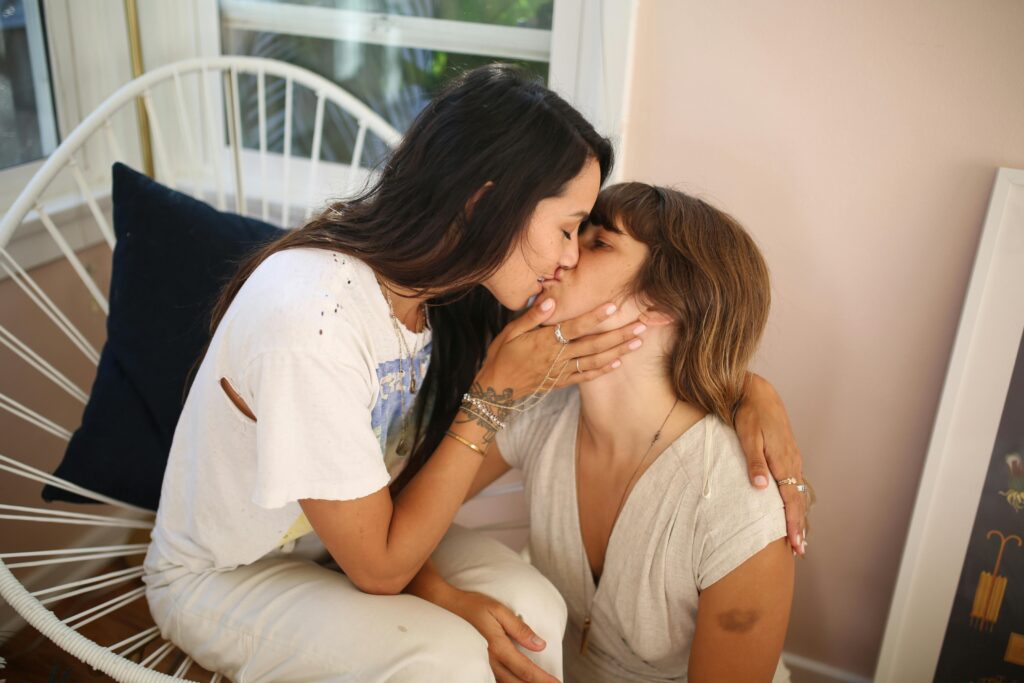
Dating as a bisexual person in queer spaces can feel like unlocking a bigger world and navigating a few extra layers at the same time. There’s more possibility, more culture, more ways to connect. And that’s super exciting!
But there can also be misunderstandings, assumptions, and the occasional “wait… so what does that mean for us?” conversation.
If that sounds familiar, you’re not alone. So many of us have been there, and many bi+ people move between different dating cultures, which can be exciting but also… We admit that it can be a little complicated. The good news: a few intentional habits can make queer dating feel a lot more grounded and affirming.
This guide shares seven practical, research-backed tips to help you date confidently, reduce biphobia and miscommunication, and build connections that respect your whole identity. You’ll learn how to signal your bisexuality clearly online and IRL, communicate boundaries early, blend dating apps with community events, and prioritize safety while exploring new relationships.
Whether you’ve dated across genders for years or you’re stepping into sapphic spaces for the first time, these strategies are designed to help you find your people and your pace without over-explaining yourself or shrinking who you are.
HER is a sapphic-first dating and community app built to center bisexual, lesbian, queer, and non-binary users. It was founded to offer a safer, community-forward alternative to mainstream apps: one that understands sapphic culture, emotional nuance, and respectful pacing.
Standout features are designed to normalize bisexual visibility and reduce friction: as one roundup notes, HER’s Pride Pins let users display identity traits and filter matches, the app lists local LGBTQ+ events to help users meet in real life, and it includes an incognito mode for extra privacy (Mashable’s guide to the best lesbian dating apps).
Compared with mainstream platforms like Tinder or general LGBTQ+ networks like Taimi, HER doubles down on sapphic identities and community belonging. It also differs from Grindr’s fast, men-focused experience by offering slower, conversation-forward tools and community events so you can connect beyond swipes. If you’re bi and want your identity seen and respected from hello, HER’s environment is built for you.
Clarity and honesty remove a lot of awkward guessing games when it comes to queer dating.
Using explicit labels like bi, pan, fluid, or biflexible in your profile helps signal who you are and who you’re hoping to meet. On HER, Pride Pins make this even easier by placing identity markers directly on profiles.
Adding one or two lines about your goals also helps matches meet you where you are. For example:
• “Bi and excited to meet more queer women.”
• “Exploring sapphic dating and open to seeing where things go.”
• “Looking for something meaningful, but no rush.”
Visibility matters because bisexual people often date across genders and may not form one concentrated community, which can make organic visibility harder. Clear identity signals can help attract more respectful and aligned conversations (bi.org interview with Lewis Oakley).
Quick definition for context: Biphobia refers to prejudice, exclusion, or hostility toward bisexual people, and it can occur in both straight and queer spaces.
Queer dating rarely follows one single script. That’s part of what makes it interesting…. And complicated.
Because expectations can vary across different communities, clear communication becomes one of your best tools. It’s your ace in the hole.
As one advice piece explains, “Flirting is often just conversation. The same skills work across genders” (them’s tips for newly out bi women).
A few simple habits help:
Boundary setting
“I’m enjoying this but I’d like to take things slowly.”
Checking consent
“Can I kiss you?” or “Is this pace okay?”
Naming identity needs
“My bi identity is important to me even if I’m in a monogamous relationship.”
A helpful rhythm for early dates can look like this:
These small conversations build trust quickly. Honest communication is attractive, and we’re waving major green flags.
Expanding where you meet people increases your chances of finding the right vibe.
Research shows that about 51 percent of LGB adults have used online dating, compared with 28 percent of straight adults, and roughly 65 percent of LGB online daters report positive experiences overall (Pew Research on LGB online dating). That makes dating apps a strong starting point, especially when paired with real world community spaces.
Ideas to try:
The mix of online and offline spaces often leads to the most natural connections.
| Platform | Focus | Key features | Who uses it |
| HER | Sapphic/women/NB | Pride Pins, events, incognito mode | Lesbian, bi, queer women |
| Grindr | Men/masc queer folks | Hookups, fast messaging | Gay, bi, queer men |
| Tinder | Mainstream | Wide reach, verification, mixed queer rep | All, including queer users |
| OkCupid | Compatibility focus | Nuanced orientation/gender options | All queer orientations |
| Taimi | LGBTQ+-inclusive | Social features, mixed moderation reviews | General LGBTQ+ |
It’s completely normal to feel nervous about bi or queer “firsts.” Fear of Exploration (FOE) is the anxiety bisexual individuals feel when dating outside their comfort zone, often due to limited reference points or community exposure. Naming it reduces the pressure.
Try simple language like:
For gentle guidance, explore HER’s community resources like bisexual dating app tips, bi-friendly chat spaces, and how to explain bisexuality to partners:
Safety isn’t negotiable. It’s just not.
One-third or more LGB online daters report harassment realities: 56% have received unsolicited explicit images, and 42% say someone continued contacting them after they said no (Pew Research on LGB online dating harassment).
Build in safeguards for dating safety:
Switching from dating men to women (or vice versa) can surface subtle culture shifts. We want to yell from the rooftops just so that you know: nothing’s wrong with you. This is completely expected, and you’re just learning new norms. Because bi people move across multiple subcultures, being curious and explicit helps (bi.org’s interview perspective):
Common culture shocks to expect (and ask about):
Quick glossary: The “bi umbrella” includes non-monosexual identities like bisexual, pansexual, fluid, and biflexible. Don’t worry if this feels overwhelming. Many of us learn multiple dating languages over time, and they’re always changing and evolving. It’s okay for you to do that too.
Dating is connection and self-discovery. Root yourself in community to make both easier:
A simple reflection loop keeps growth steady:
Take the pressure off labels or permanence early on. Curiosity often leads to the most honest outcomes.
Wear or display bi pride symbols, clarify your identity in profiles, and bring bi culture into your conversations and dates so your queerness is seen regardless of partner gender.
Join bi/LGBTQ+ groups and attend in-person or virtual meetups; consistent participation builds trust, friendships, and dating opportunities.
Respond with calm clarity about your identity, lean on inclusive communities, and use platforms that center bisexual visibility to reduce friction and harm.
Add bi flags or Pride Pins to profiles, mention your identity in your bio, and share bi-positive content to normalize and signal who you are.
State your identity and needs openly, invite honest conversation, and agree on boundaries that protect both your visibility and your partner’s comfort.
Robyn Exton, Mook Phanpinit, Jill O'Sullivan
Robyn is the CEO & Founder of HER. Find her on Twitter.