Robyn Exton, Jill O'Sullivan, Mook Phanpinit
Robyn is the CEO & Founder of HER. Find her on Twitter.
Select your language


Robyn Exton, Jill O'Sullivan, Mook Phanpinit
Mar 13, 2026
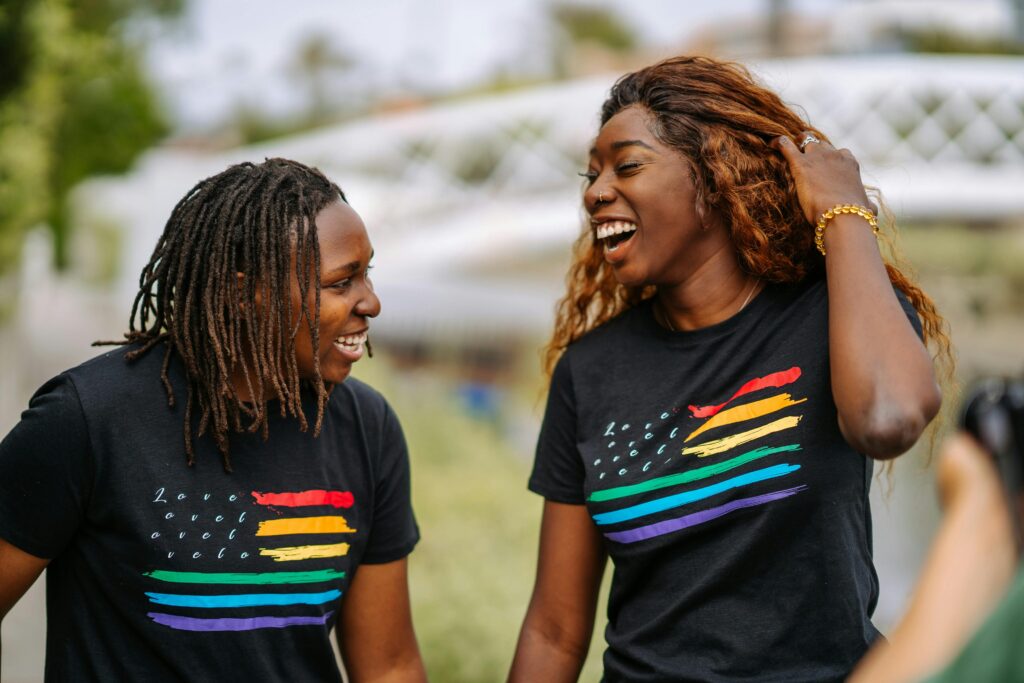
Wondering if you should come out as bi on your dating profile? The honest answer: do what feels safest and most true for you. There’s no single “right” level of visibility when it comes to your identity.
Dating apps are one of the main ways that sapphics meet today. About half of lesbian, gay, and bisexual adults say they’ve used dating apps, according to Pew Research (Pew Research on LGB online dating). Many platforms now support orientation labels as well. For example, Tinder introduced its Orientations feature globally so users can share identity up front and match more intentionally (Tinder adds orientation labels).
In other words, there’s real space for bisexual visibility online. The goal isn’t to perform your identity perfectly. It’s to present yourself in a way that attracts affirming matches while protecting your safety and comfort.
Below are practical bisexual dating profile tips to help you signal your identity clearly or subtly, set boundaries, and connect with people who actually get it.
Visibility isn’t all or nothing. Some people write “bisexual” directly in their bio, while others prefer softer signals like emojis, pride colors, or language that queer folks recognize.
Both approaches are valid, especially if you’re not out everywhere or live somewhere that feels less supportive. Queer media has also pointed out that discretion on dating profiles can be a meaningful safety choice depending on someone’s circumstances (Autostraddle on profile discretion).
Visibility simply means intentionally sharing parts of your identity through words, symbols, or cues so others understand who you are.
| Signaling style | What it looks like | Pros | Watch-outs |
| Explicit | “Bi” or “Bisexual” in bio; orientation label on app | Filters faster, attracts affirming folks, reduces confusion | May draw biphobia; consider privacy in less-safe spaces |
| Semi-explicit | “Queer, into women and enbies,” or “sapphic bi”; bi flag emoji | Clear to most queer users; still a touch private | Some may miss the cue or make assumptions |
| Subtle | Bi flag colors in a pic, bi earrings, purple/pink/blue emoji string | Maintains privacy; softens the reveal | Increases follow-up questions; slower filtering |
If you’re early in coming out bisexual on dating apps, start wherever you feel grounded and adjust as your comfort level shifts.
A few honest lines about what you’re looking for can dramatically improve your matches.
Relationship preferences might include things like monogamy, ethical nonmonogamy, casual dating, or queerplatonic connections.
Boundaries are simply the limits you set to protect your comfort, safety, and emotional well-being while dating or messaging online. You don’t have to do anything on a date that you don’t want to do, and stating boundaries early helps others understand how to interact with you.
Try to keep the tone positive and forward-looking. Focus on what you want rather than listing everything you dislike.
The best dating bios are short, specific, and a little personal without dumping all your lore all at once.
A few details about what things make you happy, how you spend your weekends, or the kind of connection you want can help affirming matches recognize your vibe quickly.
For example:
Clear and confident bios tend to attract more meaningful conversations because they show self-awareness and authenticity (insights on clear, confident bios).
You can also add a playful prompt to make messaging easier:
Avoid overly generic lines like “I love to laugh” or “I enjoy adventure.” They don’t give people much to respond to (tips on avoiding profile clichés). See also: “Ask Me.” Ask you what? Give ‘em something to ask.
For more context on navigating stereotypes around bisexual dating, HER’s guide on bisexual dating double standards explores how bias sometimes shows up in queer dating spaces (HER on bi dating double standards).
A small cue can go a long way in helping people understand your identity at a glance.
Cues are words, symbols, or visuals that signal community or identity. They can help prevent awkward “big reveal” moments later and filter for people who already respect bisexual identities (Hinge first-date tips).
If you need a refresher, bisexuality generally refers to attraction to more than one gender (UCSB on bisexual identity).
These cues help other sapphics recognize you while giving you control over how visible you want to be.
Protecting your energy starts with early filtering.
Unfortunately, some bisexual people still encounter stereotypes or fetishizing behavior while dating. Some bi users report rejection on lesbian apps simply for stating they’re bisexual, highlighting the persistence of biphobia in some spaces (essay on bi dating challenges).
Some simple responses to keep in your back pocket:
“So you’re greedy?”
→ “Nope. I’m bi. If that’s an issue, we’re not a match.”
“Prove you’re actually into women.”
→ “I don’t entertain tests of my identity.”
“Tell me about your past partners.”
→ “I keep that private. I’m happy to talk about what I’m looking for now.”
Prioritize people who read your profile, respect your boundaries, and engage with curiosity instead of assumptions.
HER’s safety tools, including blocking, reporting, and privacy controls, can also help filter out problem users (HER’s bisexual dating apps).
Being clear about what you want can feel vulnerable, but it often leads to better connections.
If you like someone, it’s okay to say so. Asking someone out directly can actually reduce anxiety compared to waiting for signals that might never come (queer dating tips on directness).
And remember: rejection happens to everyone. It doesn’t invalidate your identity or desirability.
Self-care during dating might look like:
Small rituals can also help boost confidence before a date. Maybe that’s a favorite playlist, a quick stretch, or a check-in with a friend.
After a rough interaction, try a quick reset:
If deeper conversations about identity come up later, HER’s guide on explaining bisexuality to partners offers helpful scripts and strategies (HER on explaining bisexuality).
You can hint at being bi with emojis or color cues, use gender-neutral language, or list “queer” until you feel ready to share more.
State preferences clearly and positively, like “only interested in women and nonbinary folks” or “seeking connections that respect my boundaries and time.”
Unmatch or block, or reply once with a firm boundary; then move on to people who treat your identity with respect.
Use fun, open-ended prompts like “What’s your favorite queer read lately?” or “Drop your best meme.”
Remember, everyone has off nights. Treat each one as practice, lean on self-care, and keep going; your identity isn’t up for debate.
Robyn Exton, Jill O'Sullivan, Mook Phanpinit
Robyn is the CEO & Founder of HER. Find her on Twitter.