Robyn Exton, Mook Phanpinit, Jill O'Sullivan
Robyn is the CEO & Founder of HER. Find her on Twitter.
Select your language


Robyn Exton, Mook Phanpinit, Jill O'Sullivan
Mar 20, 2026
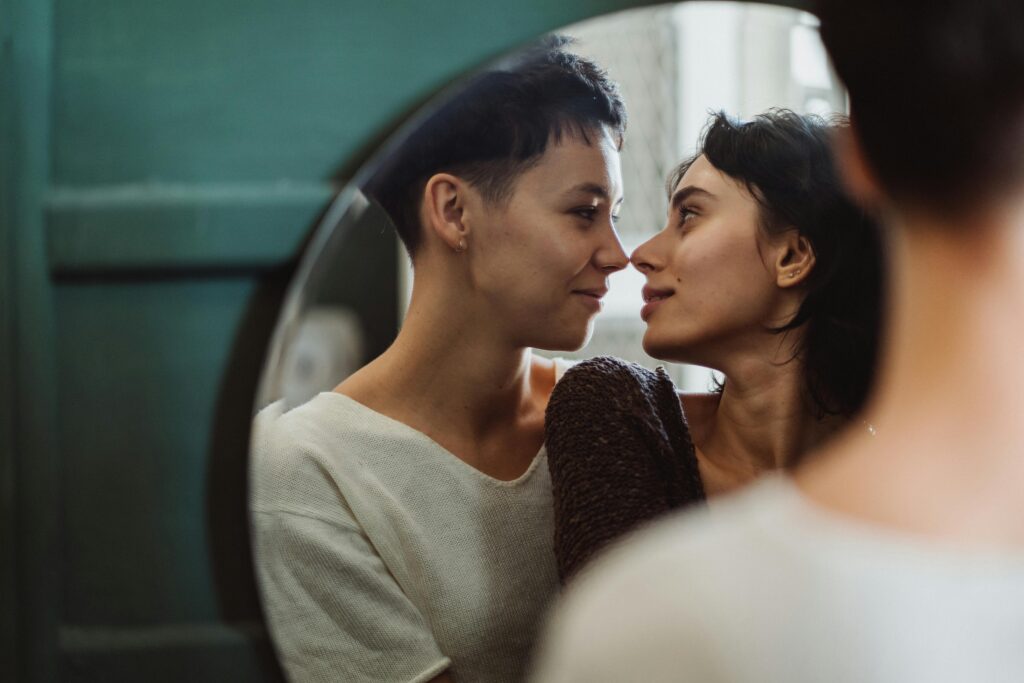
Being nonbinary and interested in someone who only likes one gender (sometimes called monosexual) can feel tricky… but it doesn’t have to be.
The truth? You can date monosexual people as long as your identity is honored and the connection feels mutual. Nonbinary means your gender isn’t just “male” or “female,” and your attraction, chemistry, and boundaries are yours to shape. Some monosexual folks are into nonbinary people, some aren’t. And that’s okay. What matters most is clarity, consent, and care. In this guide, we’re sharing practical, heart-forward tips for speaking up early, protecting your energy, and building connections that truly see you HER-style, with community, confidence, and sapphic love at the center.
Nonbinary describes people whose gender isn’t exclusively male or female, and who may use pronouns like they/them or others that feel best for them, as outlined in the Stonewall glossary of LGBTQ+ terms. Orientation is different from gender identity: gender is who you are; orientation is who you’re attracted to… and both can exist across a spectrum, not just two boxes, as explained by WebMD’s overview of nonbinary identity.
Before you date, get clear on your needs:
If you want a deeper primer, see HER’s What Is Non-binary? guide for language and support.
Clear, early communication filters in aligned matches and saves you from on-demand education. Add pronouns and a short sentence to your profile so people understand how to talk about you from the start. Apps that surface pronouns and nuanced identities, like HER’s profile fields and community spaces, make this easier; some mainstream apps still lack inclusive filters or fields for nonbinary folks, as noted in nonbinary dating tips from enbymeaning.
Try a first-message template:
Include a brief, defined note to reduce guesswork:
Want more support? Explore HER’s non-binary dating hub and our roundup of safe dating apps for trans and nonbinary people.
You get to choose how much explaining you do. Decide in advance whether you’ll answer questions, share links, or ask partners to research on their own. Nonbinary dating coach Renee Yoxon recommends setting this expectation upfront so your energy isn’t drained by constant 101 conversations.
A simple boundary line you can use:
It’s okay to walk away if someone can’t use your pronouns, centers their discomfort, or refuses to learn. Many nonbinary people report relationship erasure or pressure to “fit” a binary role; knowing when to disengage protects your well-being, as highlighted in reporting on nonbinary recognition in relationships from Gay Sonoma.
Common emotional labor pitfalls and healthy responses:
Using your partner’s correct name and pronouns is mandatory, not optional, a point echoed in supportive guides for partners of nonbinary people. Agree on language early, including nicknames, relationship terms (partner vs. boyfriend/girlfriend), and words for body parts and intimacy.
Scripts you can keep handy:
For more language examples and etiquette, see Equally Wed’s guide on dating a nonbinary person. If body language matters to you, co-create terms that feel right before intimacy; Scarleteen’s resource on navigating dating beyond the binary offers frameworks for that conversation.
Gender-neutral language alternatives you can adopt:
Being seen is essential, but it’s not the whole match. Don’t settle for “acceptance only”. Look for shared values, emotional reciprocity, and everyday compatibility. Regular check-ins help, especially as identities or presentations evolve; attraction can shift during or after a transition, and that’s something to discuss openly, as explored in Minka Guides’ piece on non-binary dating.
Remember: your queerness or nonbinariness isn’t defined by a partner’s label. If a monosexual person is into you, they’re into you. You don’t need to retrofit your identity to their words.
Safety and comfort come first. Choose queer-friendly spaces where your pronouns and presence are more likely to be affirmed. Share your plan with a trusted friend, discuss public touch preferences, and agree on how you’ll handle misgendering before you meet. For app-based dating, HER’s safety tools and community context add layers of visibility and support.
Not all dating apps are built with nonbinary people in mind… and you can feel the difference immediately. The best platforms tend to share a few key things: multiple gender options, pronoun visibility, strong moderation, and a user base that actually understands queer experiences. Apps like HER and Lex center queer and nonbinary users from the start, which often means less explaining and more connecting. For example, HER combines dating with community features like events and community chats, creating a space that feels more social and affirming, while Lex leans text-first, encouraging people to lead with identity, intentions, and personality over photos.
If you’re open to mainstream apps, some have made real progress on inclusivity. OkCupid is known for its expansive gender and orientation options and compatibility-focused matching, while Hinge emphasizes personality through prompts and conversation starters. Apps like Feeld offer even more flexibility for people exploring nontraditional relationship styles, with customizable gender and desire settings built into the experience. The move across the industry toward broader gender options, like Tinder expanding beyond the binary, signals progress, but your experience will still depend on who’s using the app in your area.
The takeaway: there’s no single “best” app. Just the one that fits your identity, your intentions, and your energy. Many nonbinary daters find the sweet spot in a mix: one queer-centered app for safety and community, plus one or two mainstream apps for reach.
Your community buffers stress, fuels joy, and makes dating less high-stakes. Join LGBTQ+ groups, online spaces, and local meetups (Pssst, HER’s in-app communities are made for this) to find peers, mentors, and friends alongside romance. Some nonbinary people prefer T4T (trans for trans) dating for mutual understanding and less explaining; that’s a valid, affirming choice. Stories from nonbinary daters show how chosen family and community support make relationships more resilient, a theme echoed in Teen Vogue’s interviews with nonbinary people about dating and love.
If you’re seeking affirming healthcare or mental health support, directories like OutCare Health’s OutList can help you find LGBTQ-competent providers.
Yes. It depends on how each person understands their attraction and label; some monosexual people may date nonbinary folks, others may not.
Use inclusive apps, state your boundaries on your profile, and disengage or block anyone who disrespects them.
Absolutely. You can limit how much you explain and ask partners to do their own learning.
Offer a simple correction in the moment and follow up privately if needed; repeated misgendering is a valid reason to end the date.
HER offers pronoun visibility, queer-focused filters, and community spaces. Local LGBTQ groups and forums can also expand your support network.
Robyn Exton, Mook Phanpinit, Jill O'Sullivan
Robyn is the CEO & Founder of HER. Find her on Twitter.