Robyn Exton, Jill O'Sullivan, Mook Phanpinit
Robyn is the CEO & Founder of HER. Find her on Twitter.
Select your language


Robyn Exton, Jill O'Sullivan, Mook Phanpinit
Apr 03, 2026
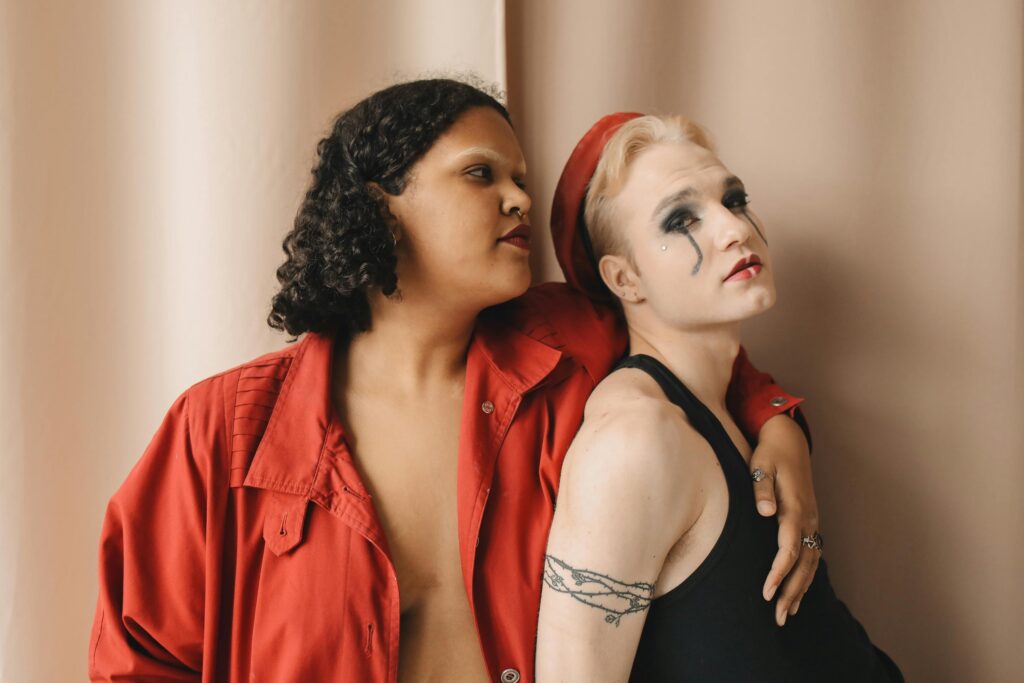
Sometimes a message starts normal… and then suddenly it’s very clear they’re not seeing you as a whole person.
If you’ve ever read something and thought, “oh… that’s not it,” you’re right.
Being fetishized for being trans isn’t flattering or cute. It’s reductive, uncomfortable, and honestly exhausting. You deserve to be desired for you, not treated like a category or a curiosity.
These responses are here to help you hold your boundaries, protect your energy, and stay rooted in your worth.
Fetishzation happens when someone reduces you to your trans identity instead of appreciating who you are as a person. A simple, clear boundary like “Thank you, but I’m not comfortable with that” draws a firm line without inviting debate.
This response helps when a match leads with intrusive curiosity or comments that make you feel like a novelty. Direct and calm language signals that you won’t explain or justify your boundary. It’s a neutral but powerful act of self-respect—one that reminds you, and them, that your comfort comes first.
When a conversation keeps circling back to your trans identity instead of your personality, steer it towards what really defines you. Authentic attraction grows from shared humour, energy and values, not from labels or fascination.
You might say, “I’d rather talk about what we both love doing,” or shift toward music, art or dreams. It’s an easy way to reassert your full self and see whether they’re here for something genuine or just surface-level curiosity.
Objectification means being treated like an idea or fantasy instead of a person whose feelings and consent matter. It can sound like invasive questions about your body or comments such as, “I’ve always wanted to be with a trans woman.”
Calling it out directly like “That language objectifies me; please stop” puts responsibility where it belongs. It also helps educate people who might not realise their language dehumanises you. If someone ignores your boundary, they’re showing that they’re more interested in fantasy than respect.
It’s completely valid to set limits on sexual conversations, especially early on. Many trans people choose this boundary as protection against fetishising behaviour disguised as “flirting.”
If someone pushes sexual chat right away, you can say, “I don’t do sexual conversations when I first meet someone.” Those who respect you will back off. Those who don’t? You’ve already filtered them out, saving yourself time and emotional energy.
Your autonomy (aka your right to govern your body, choices and personal information) is non-negotiable. This phrase reframes your standards as something you’re proud to uphold.
Research shows some cis partners may bring “porn-informed” assumptions into trans dating dynamics, focusing on anatomy or unrealistic expectations. Writing “I’m only interested in partners who respect my body and autonomy” in your profile or early messages helps screen out anyone with entitled attitudes. HER’s reporting and safety tools support you in upholding that line, making sure your experience starts from respect.
Boundaries only matter if they’re backed by action. If someone keeps using disrespectful language after you’ve been clear, it’s okay to say, “If you can’t respect my boundaries, I’ll end this conversation.”
State what’s not working, what needs to change, and what you’ll do next. It’s not harsh, it’s healthy. On HER, you can easily report or block anyone who refuses to listen, turning our built-in safety features into part of your personal boundary plan.
Even when you handle fetishization calmly, it can still sting. Having someone fixate on your transness can heighten dysphoria or leave you feeling unseen. Reaching for support is care, not weakness.
Here are a few ways to ground yourself and find community:
| When you feel triggered | What you can do |
| Need validation or to vent | Text a queer friend or drop into your group chat |
| Feel unsafe or uneasy | Block and report the person on HER |
| Struggling emotionally | Reach out to a trans-affirming helpline or therapist |
| Want solidarity | Explore HER’s community groups for trans users |
Support systems remind you that you’re not alone, and that there are spaces where you’re celebrated, not objectified.
Notice when someone fixates on your body, asks invasive questions about your transition, or describes dating you as a “first.” If curiosity outweighs care, that’s your cue.
Try, “I’m open to talking about identity, but not medical details or anatomy.” It keeps the tone clear and self-respecting.
Always a red flag. Compliments recognise your whole self; fetishisation erases it.
Choose trans-affirming platforms with clear moderation, decide how and when to disclose, and build matches where respect is mutual. On HER, safety and visibility tools are designed for this balance.
Lean on trans-led groups, queer friends and affirming professionals. On HER, community spaces and reporting features are built to help you reconnect with confidence and pride.
By setting clear lines and practicing self-advocacy, you turn uncomfortable moments into self-affirmation. You deserve matches where curiosity becomes care, and where your transness is part of your truth, never your objectification.
Robyn Exton, Jill O'Sullivan, Mook Phanpinit
Robyn is the CEO & Founder of HER. Find her on Twitter.