Robyn Exton, Jill O'Sullivan, Mook Phanpinit
Robyn is the CEO & Founder of HER. Find her on Twitter.
Select your language


Robyn Exton, Jill O'Sullivan, Mook Phanpinit
Feb 24, 2026
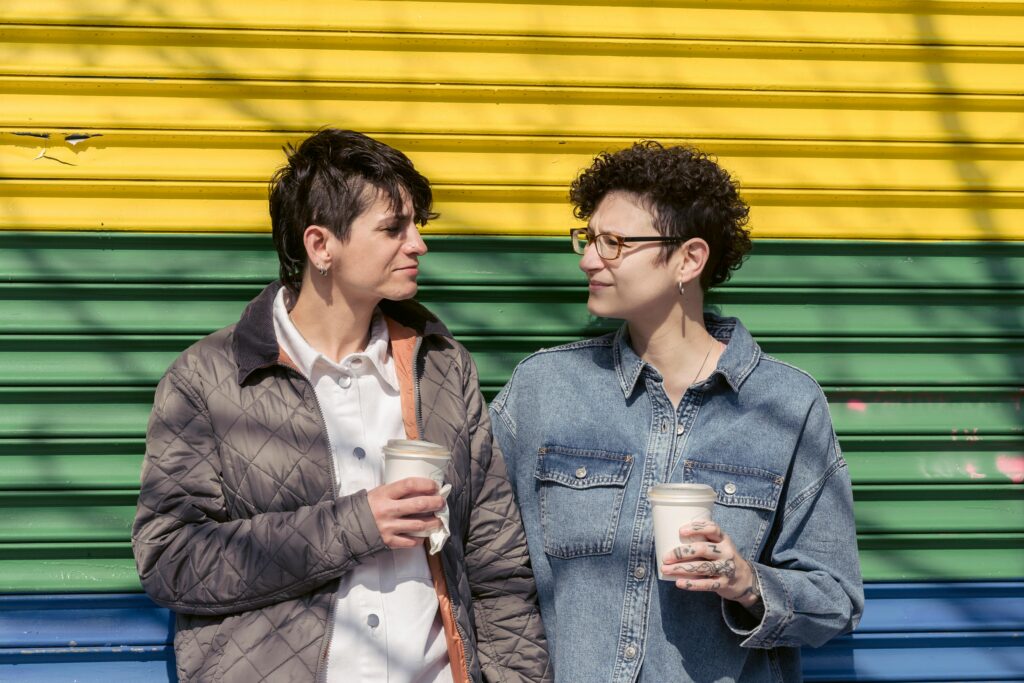
Dating in 2026 can feel loud and fast, but your love life doesn’t have to move at the speed of a swipe. If you’re a trans woman just starting to date, especially in sapphic spaces, think slow, clear, and kind.
This guide cuts through what’s trending and focuses on what actually works right now: transparent profiles, quick video vibe-checks, boundaries that protect your energy, and community-centered tools that help to keep you safe.
TLDR: lead with clarity, use safety features like they matter (because they do), and let patterns (not butterflies) guide your choices.
These dating tips for trans women who are starting to date are here to keep things affirming, grounded, and actually fun.
HER was built for queer women, trans and non-binary folks, and anyone in sapphic worlds who wants an affirming, emotionally safe space. Instead of chasing swipes or algorithmic chaos, HER leans into a calmer, curated vibe where slower connection is the norm and your identity is front and center.
In 2026, we call it “clear-coding”: that is, being upfront about your intentions and values so that your matches know your pace, your boundaries, and your hopes from the jump. No guesswork, less burnout. You’ll see that philosophy all over HER from expressive profile prompts (for deeper conversation starters to verification and report tools and hidden-words filters to block unwanted language, and even an optional Incognito Mode when you want privacy. Add in community groups and IRL meetups and events, and it’s dating that favors consent, clarity, and compatibility, not just chemistry.
Transparency filters out mismatches early, especially in sapphic spaces where labels and timelines can vary. Clear-coding simply means saying what you want, how you date, and what’s off the table. According to Tinder 2026 dating trends reported by Cosmopolitan, most daters want more clarity. About 60% say they wish matches stated intentions up front. That’s your green light to be direct and go for it!
Here’s how to say it without sounding stiff:
| Intention | How I’d phrase it on my profile | First-message opener I’d send |
| Looking for queer friends | Here for community: coffee walks, book swaps, queer trivia | Your comfort café? I’ll bring a weird memoir rec. |
| Casual dating | Flirty, low-pressure hangs. Chemistry decides the pace. | Laugh test: what meme lived in your head rent-free this week? |
| Long-term partnership (monogamous) | Monogamous, values-led dating. Slow build toward something lasting. | What does a good Sunday look like for you? |
| Ethical non-monogamy | ENM, consent-forward, love clear boundaries + calendars | What makes an ENM dynamic feel secure for you? |
| Not sure yet—slow burn | Curious, taking it slow. Let’s see if the vibe grows. | Want to trade two truths and a lie? Low-stakes start. |
Safety isn’t dramatic. It’s practical.
Most major apps now include verification badges, selfie checks, and reporting tools. These are highlighted as standard must-haves in the best dating apps guide from PCMag. Use them.
Then layer your own IRL habits.
Quick safety playbook:
Keep an eye out for scammers. A romance scam is when someone fakes a relationship online to steal money. Median reported losses hit around $2,600 in 2026, so don’t send money to new matches, no matter the story, per 2026 online dating safety data from Cliché Magazine. They might sell you a really convincing sob story that pulls at all your heartstrings: but that’s by design to get to you. Do NOT send money.
On HER, turn on hidden-words to auto-filter abusive or fetishizing messages, use Incognito Mode when you want to look quietly, and report/block instantly if something feels off.
A 5 or 10 minute video chat is the new normal. It’s not about being paranoid or untrusting: it’s just smart. It confirms identity, tests chemistry, and saves you from catfishing or one of those dreaded “oops, zero vibe” coffee dates. Many platforms now bake in video tools, and video-first norms are called out across the best dating apps in 2026 by Mashable.
Try this low-pressure flow:
If they refuse repeatedly? That’s data you can use to move on.
A profile that inspires real conversation brings better messages and safer dates. It’s easy to fall into this trap, but your profile isn’t a resume. It’s an invitation to get to know you.
Mix:
Reviewers in PCMag’s best dating apps roundup note that prompts inviting story-sharing tend to get higher-quality replies.
Great prompt ideas for trans women in sapphic spaces:
Be upfront about your identity if you’re comfortable. It protects you from awkward reveals and filters in people who will affirm and respect you.
Slow swiping is the complete and total opposite of doom-scrolling. You engage with fewer profiles more intentionally to avoid burnout. The average dater spends 5–8 hours per week on apps, with mixed payoff, according to a time-on-apps and costs analysis on Medium.
More time isn’t the solution. Better intention is.
As Glamour’s dating advice for busy professionals suggests: make space, not just time.
Mindful swiping checklist:
Boundaries are a compatibility test.
Scripts you can borrow:
Pacing: “I move slow physically — let’s check in as we go.”
Privacy: “I don’t share financial info or private pics.”
Identity: “I’m a trans woman, and I date people who respect that.”
Time: “Weeknights are busy; Sundays work best.”
Green flags:
Red flags:
If you’re unsure what fetishizing looks like, the Trans Language Primer’s definition of a chaser is worth reading.
Clear boundaries reduce emotional labor. Especially in new spaces.
Stack the deck in your favor. On HER, look for verification badges, join community groups, and try IRL meetups and events where you can read the room before a 1:1.
Friends matter too: Tinder 2026 dating trends note that 42% of singles say friends shape their love lives, and 37% are into double or group dates. Group hangs are lower pressure. And in sapphic spaces? You learn more from watching someone interact with others than from 50 DMs.
Notice:
That’s compatibility data you can’t get from the app.
Chemistry is fun, but patterns are truth.
Dating patterns are things like their texting rhythm, kindness under stress, how they handle “no,” and whether they keep small promises.
A 2026 dating trends report from Cyber-Dating Expert notes that consistency beats initial spark for long-term compatibility.
Your nervous system agrees. Hot doesn’t always mean safe, but steady often does.
If you’re slammed or exhausted by endless swipes, curated services can compress the search. Premium app tiers can reach ~$120/month, while professional matchmaking often runs $3,000–$15,000, per the Medium analysis on time and costs. It’s worth considering when your goals are specific, your time is scarce, or you’re deep in app burnout.
Approximate cost snapshot (varies by region):
| Option | Typical monthly cost | What you get | When it’s worth it |
| Standard app premium | $20–$40 | Boosts, more filters, read receipts | You want faster sorting + better visibility |
| High-tier app premium | ~$120 | Priority matching, advanced discovery | You have niche filters or location needs |
| Curated/handpicked service | $100–$300 | Limited, vetted introductions | You want human screening without full matchmaker pricing |
| Professional matchmaker | $3,000–$15,000+ (package) | Deep intake, hand-selected matches, coaching | You’re time-poor with specific LTR goals |
Want to hear something wild? Left unchecked, dating apps can eat 260-416 hours a year. If we do a little math, that’s 31–52 full days over three years by Medium’s estimate! You deserve a better return on your investment.
Here’s some energy-protecting moves:
Start with clarity (AKA clear-code your profile), add safety (verification, video vibe-checks), and protect your energy (slow-swipe, strong boundaries). Tools and AI can help, but don’t outsource your own instincts or judgment. Authenticity wins over automation, as highlighted in 2026 dating predictions from Mashable. When talking with your matches, trust consistent behavior over fast feelings, and let community settings do some of the vetting for you.
Want more support? Try HER’s deep-dive on trans dating, our rundown of dating red flags, and a compassionate guide to handling dating rejection. They’re all built with sapphic, trans-affirming context in mind.
Verify profiles, meet in public, and share your plans and location with a trusted friend before and during the date.
Show your interests and values, say what connection you’re after, and share photos that reflect your real life, not just glamour shots.
Look for steady respect, clear intentions, and consistent follow-through, not fixation on your transness or one-off flattery.
Rushed intimacy, refusal to video chat, money requests, or sexualized focus on your transition are all major red flags.
If it feels safe, yes. It filters in affirming matches and avoids awkward reveals later. But your feelings and safety take first priority here.
Set time limits, plan breaks, and lean on queer friends or community spaces when the process feels heavy.


Robyn Exton, Jill O'Sullivan, Mook Phanpinit
Robyn is the CEO & Founder of HER. Find her on Twitter.