Robyn Exton, Mook Phanpinit, Jessica Serviat
Robyn is the CEO & Founder of HER. Find her on Twitter.
Select your language


Robyn Exton, Mook Phanpinit, Jessica Serviat
Apr 16, 2026
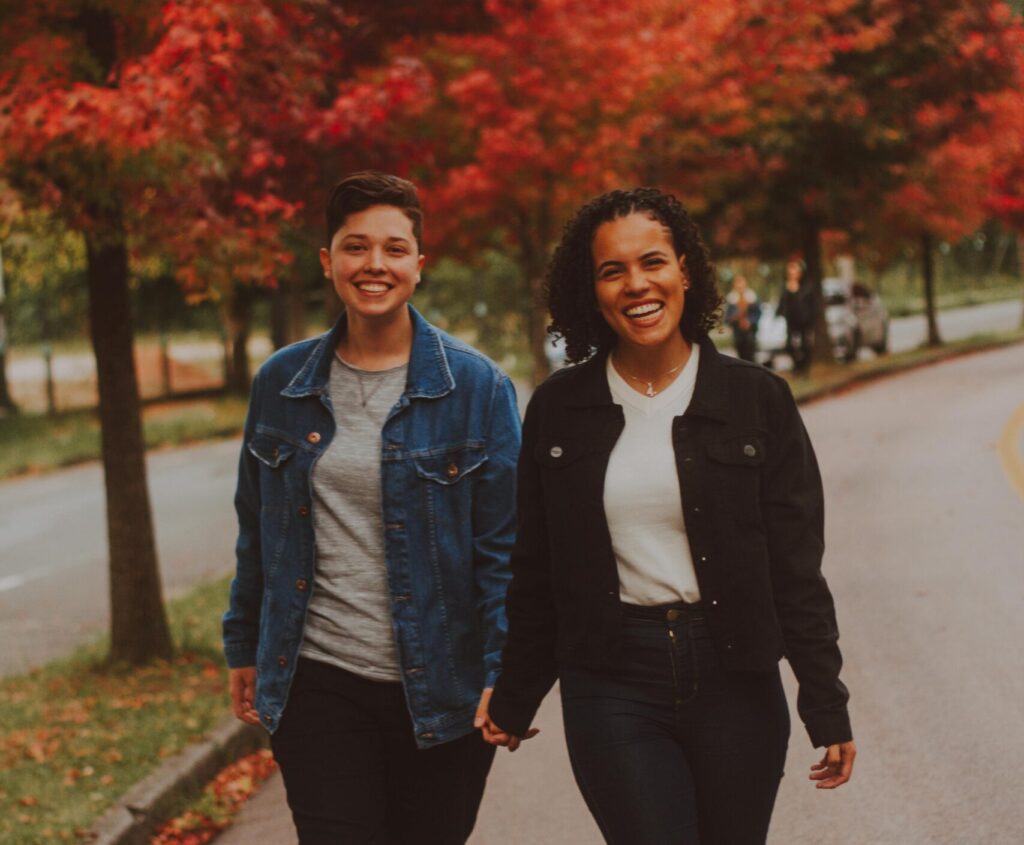
Dating as a trans woman can feel like navigating multiple worlds at once, balancing safety, authenticity and hope in a space that doesn’t always treat you fairly.
From disclosure dilemmas to managing safety risks, these experiences are both deeply personal and widely shared.
If you’ve ever felt like dating takes more energy than it should, you’re not imagining it.
Dating should feel exciting, not like something you have to survive.
If something has ever felt off while dating, even if you couldn’t explain why, that feeling matters.
Whether you’re getting back into dating or figuring out where to start, these insights, drawn from community experience and HER’s sapphic-centred approach, can make connection feel more authentic and a little more possible.
Ghosting (when someone disappears without explanation) and breadcrumbing (sending just enough messages to keep you interested) hurt everyone, but they can feel especially heavy for trans women.
When you’re already navigating vulnerability and marginalisation, these behaviours can leave you questioning your worth or your instincts. That can be really draining.
If this happens, remind yourself it’s not about you. Protect your energy by not over-investing emotionally too early, setting clear boundaries on communication, and noticing patterns instead of excuses.
Use in-app features like HER’s chat controls to manage engagement and step back when things feel inconsistent.
Treat early dating as low-stakes exploration: your peace of mind comes first.
Dating safety is essential, not optional.
Trans women statistically face higher risks of harassment and violence, so strong screening practices are non-negotiable.
Nearly half of online daters say they want apps to require background checks, which shows how seriously people are taking personal safety.
Screening someone means taking a bit of time to check they’re genuine, respectful and safe before meeting.
Keep communication within the app, use identity verification tools, and research profiles for authenticity.
Always meet in public, share your location or plans with friends, and trust your gut: if something feels off, it probably is.
Apps like HER prioritise moderation, queer-informed safety tools and community-driven reporting to reduce harm before it reaches your inbox.
When and how to disclose your trans identity is a deeply personal decision.
Some prefer to state it clearly on their profile, while others wait until there’s rapport through messaging. Neither option is wrong. The goal is to protect your safety and emotional wellbeing.
Text-based disclosure before meeting can filter out unsafe or uninformed matches early while normalising transparency.
You can also use inclusive profile settings or short affirming blurbs to self-identify without turning your identity into an announcement. Framing it as neutral information, simply part of who you are, helps you stay in control of the conversation.
Fetishisation happens when someone sees you as a fantasy instead of a full person.
Common red flags include invasive questions about your body, secrecy around being seen together, or an exaggerated focus on your trans identity.
Set boundaries early. A clear “I’m not comfortable discussing that” or “I’m here to connect authentically, not be someone’s experiment” can speak volumes.
If you feel disrespected, disengage, no explanation required.
HER’s moderation systems help limit “chasers,” and queer-centred spaces like T4T or sapphic communities tend to respect trans boundaries and experiences more deeply.
Transphobia, which is a bias or discrimination against transgender people, still shapes dating dynamics.
Whether it’s rejection after disclosure or microaggressions mid-conversation, the emotional toll is real.
Studies show nearly half of online daters report negative experiences, and for trans women, stigma can amplify that burden.
It’s important to separate systemic bias from your self-worth.
Lean on affirming communities, like the ones built inside HER, where your identity isn’t questioned. Seek out partners who use correct pronouns, practise allyship and show genuine curiosity rooted in respect.
Apps designed for queer and trans people reduce exposure to bias and open more space for mutual attraction.
Navigating financial pressure while dating can feel stressful, but it doesn’t have to define your experience.
Dating has gotten pricey.
With “date‑flation” pushing the average U.S. date cost close to $189, financial stress can easily get in the way of connection, especially given income disparities many trans women face due to workplace inequality.
Authenticity doesn’t come with a bill. Coffee walks, community events or queer meetups can all make great low‑cost date options.
Don’t be afraid to suggest affordable alternatives; if someone values you, they’ll care more about conversation than cocktails. Often, low‑budget dating brings out higher‑quality connection anyway.
Swipe culture is designed for speed, not depth.
Quick bios, filtered photos and endless scrolling can make people feel like products. For trans women who already feel scrutinised, this can get exhausting over time.
The antidote? Slow down.
Prioritise quality over quantity by curating who you engage with and focusing on apps that let you express yourself fully.
On HER, for example, you can share identity, values and vibe beyond the basics. View matches as starting points, not scores, and focus on connection that feels reciprocal.
Many people, especially Gen Z, are having fewer face-to-face interactions than before, making real‑life dating feel daunting.
For trans women, this shift can heighten anxiety or self‑doubt about body language, voice or presentation.
Confidence grows with practice. Join group events, queer meetups or HER community gatherings to rebuild social ease. Try a 30‑day confidence challenge to get comfortable starting conversations again.
Every casual chat is a rehearsal for something real.
“Dating for the plot” means going on dates mainly for the experience or story, rather than genuine connection.
It might sound fun, but the drama can come with an emotional hangover.
For trans women, chasing novelty or validation can overlap with real safety risks or burnout.
Before saying yes to an adventurous date or uncertain match, pause and ask: what’s my intention?
If it’s for experience, that’s fine, but weigh the emotional cost.
Ground your choices in curiosity, not chaos; you deserve storylines that end in calm, not clean‑up.
Emotional balance is just as important as attraction when building a relationship.
Trans women often shoulder extra emotional labour when dating, educating partners, softening awkwardness or constantly self‑advocating.
Over time, that can lead to fatigue or resentment. Healthy dating should feel mutual, not one-sided.
Name your needs, value reciprocity and stop over‑explaining your existence to people unwilling to learn. If someone is serious about connection, they’ll share the emotional work.
Think of dating less as auditioning and more as building something together: shared effort, shared joy.
Here’s a quick way to approach dating with more clarity and safety:
| Strategy | Why it helps |
| Use apps with strong moderation and identity options | Decreases harassment risk and fosters affirming matches |
| Set boundaries early (disclosure, conversation, pace) | Protects emotional safety and clarity |
| Choose low‑cost, low‑pressure dates | Keeps focus on compatibility, not performance |
| Treat early dating as light experimentation | Builds confidence while protecting your energy |
| Join HER events or 30‑day social challenges | Strengthens in‑person confidence and community ties |
You can’t control how others behave, but you can choose how you show up.
Prioritise safety, clarity and self‑compassion: they’re your best filters for finding people who truly see you.
The safest time to disclose your trans identity is before meeting in person, either on your profile or through in-app chat
Watch for invasive questions or secrecy, and if someone reduces you to your identity, set a boundary or end the chat immediately.
Keep things light, wait for consistent effort before opening up, and trust pacing that feels natural for you.
Suggest relaxed, affordable date ideas like community events or coffee walks. This keeps the focus on chemistry, not cost.
Meet in public, tell a friend your plans and use HER’s in‑app chat or video call to confirm who you’re meeting first.
If you’d like to explore this further, here are a few trusted resources:



Robyn Exton, Mook Phanpinit, Jessica Serviat
Robyn is the CEO & Founder of HER. Find her on Twitter.