Robyn Exton, Jill O'Sullivan, Mook Phanpinit
Robyn is the CEO & Founder of HER. Find her on Twitter.
Select your language


Robyn Exton, Jill O'Sullivan, Mook Phanpinit
Feb 05, 2026
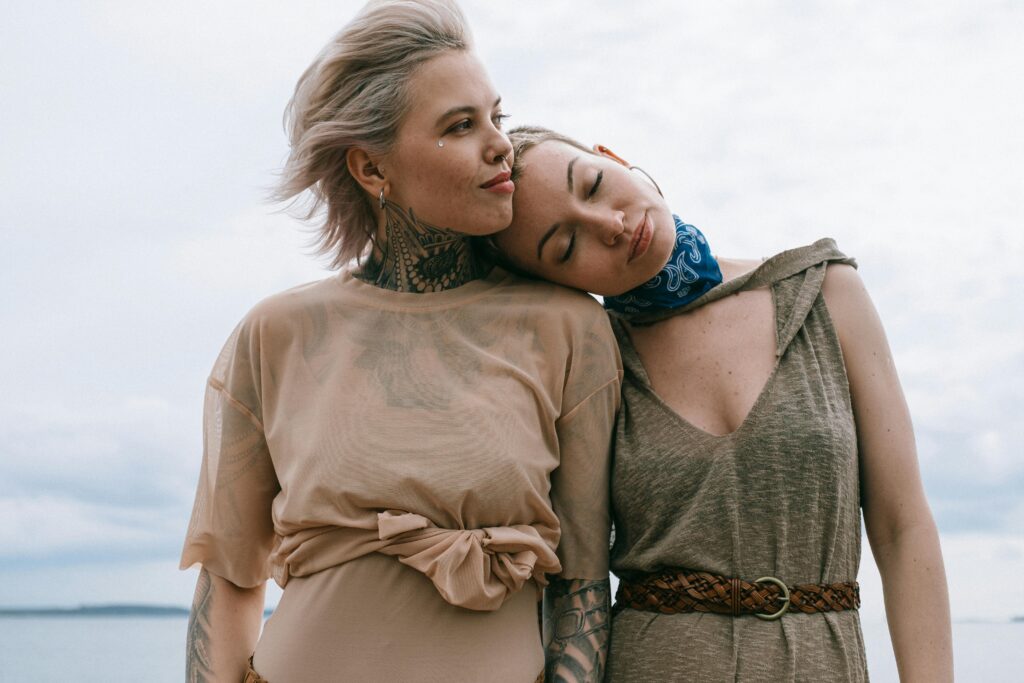
Dating as an ace-spectrum queer woman can feel like learning your own choreography- your pace, your rhythm, your rules, and even what music you’re listening to in the first place. Asexuality is a sexual orientation where someone experiences little to no sexual attraction. This sits separately from romantic orientation, which is about who you want to date or partner with. (If you feel little to no romantic attraction, that’s called aromantic).
So the answer to the huge question in the room is yes: asexual people absolutely can have romantic relationships, and many do, by building rich, fulfilling relationships through emotional intimacy, care, and chosen rituals. If you’re looking for asexual dating tips and advice rooted in sapphic lived experience, here are practical, pressure-free strategies you can use right now.
Sapphic women on the ace spectrum deserve ace-friendly dating spaces where boundaries are honored, and connection isn’t measured by sexual pressure. HER was built around that exact sentiment: centering consent culture, identity nuance, and safer, community-first vibes. Our platform is inclusive (and supportive!) of asexual identities, reducing mismatches and stress during those early chats with new connections.
What this looks like in practice:
If you want a deeper dive into how to date on your terms, explore HER’s ace dating hub.
Think of your profile as both a soft boundary and a beacon. Share your identity (like “asexual,” “ace,” “demisexual,” “gray-ace”), romantic orientation (biromantic, homoromantic, aromantic, etc.), and intentions (“seeking a cuddle-forward romance,” “romance yes, sex no,” “open to QPP”). Use pronouns and labels that best identify you, and write an intention-driven bio: “Quality time > hookups. Love deep talks, long walks, and low-pressure connection.”
Being upfront filters out mismatches from the jump and invites the right people in. As one piece of AVEN community advice puts it, be upfront about your asexual identity; if someone can’t accept it, don’t waste your time. Your asexuality is valid, and you deserve someone who honors that fully.
Platform choice shapes your experience. Prioritize ace-inclusive and sapphic-first spaces that center safety and reduce sexual pressure.
Options to consider:
Ace-friendly spaces are places where asexual identities and boundaries are assumed valid, sex isn’t a default expectation, and your “no” doesn’t need a dissertation on why.
A Yes/No/Maybe list is a simple tool where each person notes what types of intimacy feel good, what’s completely off the table, and what might be something to explore under the right circumstances. It can include physical touch, emotional rituals, and day-to-day closeness, whatever intimacy means to you and your partner.
Here’s how it works:
| Intimacy type | Yes | No | Maybe |
| Holding hands | X | ||
| Kissing | X | ||
| Watching movies close | X | ||
| Sex | X | ||
| Writing love notes | X |
Pro tip: Revisit as comfort shifts, consent, and preferences evolve. The more communication, the better.
You don’t owe your life story on message number one. That being said, sharing your ace identity and boundaries before expectations build can save you heartache in the long run. Try something low-pressure: “hey so, just so you know, I’m on the asexual spectrum. I’m excited about romance and affection, but sex isn’t a part of my relationships.” Early clarity helps avoid unsafe dynamics and mismatched goals.
Trust your gut on timing. Share once that basic connection is there, and lean on community threads if you need scripts or support. You’ve got this!
Boundaries are living, changing, evolving agreements, not one-time declarations for life. Consent is specific, ongoing, and revocable. “Well, you didn’t say no” is not consent. The Ace and Aro Relationship Guide underscores that boundaries can cover more than just sex: alone time, texting cadence, PDA, sleepovers, shared finances, and even holidays. Name what matters to you.
Try check-in scripts:
They might feel a bit weird or stiff at first, but with the right person, checking in on boundaries and how you’re feeling will become second nature, and part of healthy growth in your relationship.
Having a few phrases at the ready in your back pocket can calm your nervous system in the moment, so instead of freaking out, you feel confident and grounded, and ready for the conversation. Remember- it’s okay to be firm. Your boundaries are your own: period.
Direct isn’t rude. It’s self-protective and helps compatible partners find you.
Use app features to communicate once, not 50 times. By being straightforward in your profile, you show your expectations for dating upfront, so anyone can see it from the first swipe. This saves you the time, stress, and headache of having to tell each new match, time and time again.
We recommend:
On HER and similar apps, fill out profile prompts and questions that reflect your boundaries and dating pace so you don’t have to “out” yourself in every single chat.
Your safety, both emotional and physical, is non-negotiable. Meet in public first, tell a friend your plans, and trust any vibe that gives you the ick. Common red flags include pressuring for sex, minimizing or blowing off your identity, boundary-pushing, or gaslighting; pressure corrodes trust. If they’re doing that- they’re not the one.
Quick safety checklist:
| Safety step | Why it matters |
| Meet in a public place | Keeps exits, staff, and visibility nearby |
| Share your live location with a friend | Adds accountability and backup |
| Plan your own transportation | Lets you leave on your timeline, and prevents them from knowing where you live too soon |
| Set a check-in text time | Built-in pause to assess how you feel |
| Name a boundary upfront | Filters out people who won’t respect it |
Community makes dating less scary. Join ace-focused forums, local meetups, and sapphic group chats to swap stories, compare scripts, and feel less alone. Accessible education and support resources can help you and your partners navigate asexuality.
If you’re ace, you know that it’s not all about sex when it comes to bonding in a relationship. There are plenty of intimate acts that are still special and meaningful, even without the physical hook-up. Non-sexual intimacy is everything that grows closeness without sex: cuddling, slow dancing in the kitchen, co-op video games, art nights, playlist swaps, deep talks late into the morning, cooking new recipes together, or writing each other cute notes. Personal stories from ace people in love show how rituals like weekly check-ins, morning coffee walks, or handholding at shows, can be just as tender and meaningful as anything sexual. Map your “yeses,” try little experiments to see what clicks for you both, and celebrate what feels good.
There’s no one right way to build an ace-centered life. Talk openly about structures that could fit both of you. For example, non-monogamy can be a negotiated solution when partners have differing sexual needs.
Note: There are plenty of monogamous asexual folks who are not interested in opening the relationship and that is 100% just as valid. This is aimed at folks who are intentionally seeking out other relationship styles.
| Structure | Possible benefits for ace folks | Challenges to navigate |
| Monogamy | Clear expectations; simplicity; deep focus | Misaligned sexual needs may require creativity |
| Non-monogamy (ENM) | Partners can meet needs in multiple ways | Requires strong boundaries, communication, and time management |
| Solo poly | Autonomy; relationships on your own terms | Social scripts may not validate it |
| Queerplatonic partnership | Explicit, committed intimacy without sex | Explaining QPPs to others; legal/structural gaps, misalignments in romantic connections |
Revisit structure as needs change. What works today might evolve next year, and that’s okay.
If someone guilt-trips you, dismisses your asexuality, or keeps pushing boundaries, you’re allowed to leave. We’ll say it again louder: You are allowed to leave whenever you choose.
Your “no” is enough. Ending a connection isn’t a failure. It’s self-trust and keeping yourself safe. Talk it out with friends or your community, and ask yourself: “Do I feel safe, seen, and respected here?” If not, you already have your answer. A good partner won’t pressure you for those things, and there’s nothing to feel guilty about for protecting your peace.
Being asexual and queer means seeking connection and possibly romance with little to no sexual attraction, while also being a part of the LGBTQ+ community and its many relationship styles.
Absolutely yes! Ace-centered romantic relationships can be deeply satisfying, built on shared values, emotional intimacy, and creative, non-sexual closeness. Asexual folks can be just as deeply smitten, in love, happy, healthy, and long-term as those who are allosexual (that is, folks who do experience sexual attraction).
Use simple, direct phrases like “I’m not comfortable with that” or “Can we try this instead?” With the right person, honesty feels easier, not risky.
Cuddling, date nights, shared playlists, cooking, crafting time, walks, letter-writing, and regular emotional check-ins all build trust and closeness without sex.
Seek LGBTQ+ and ace-inclusive apps like HER, local meetups, and online forums where asexuality is named and affirmed so you can date without pressure or stigma.
Robyn Exton, Jill O'Sullivan, Mook Phanpinit
Robyn is the CEO & Founder of HER. Find her on Twitter.