Robyn Exton, Mook Phanpinit, Jessica Serviat
Robyn is the CEO & Founder of HER. Find her on Twitter.
Select your language


Robyn Exton, Mook Phanpinit, Jessica Serviat
May 08, 2026
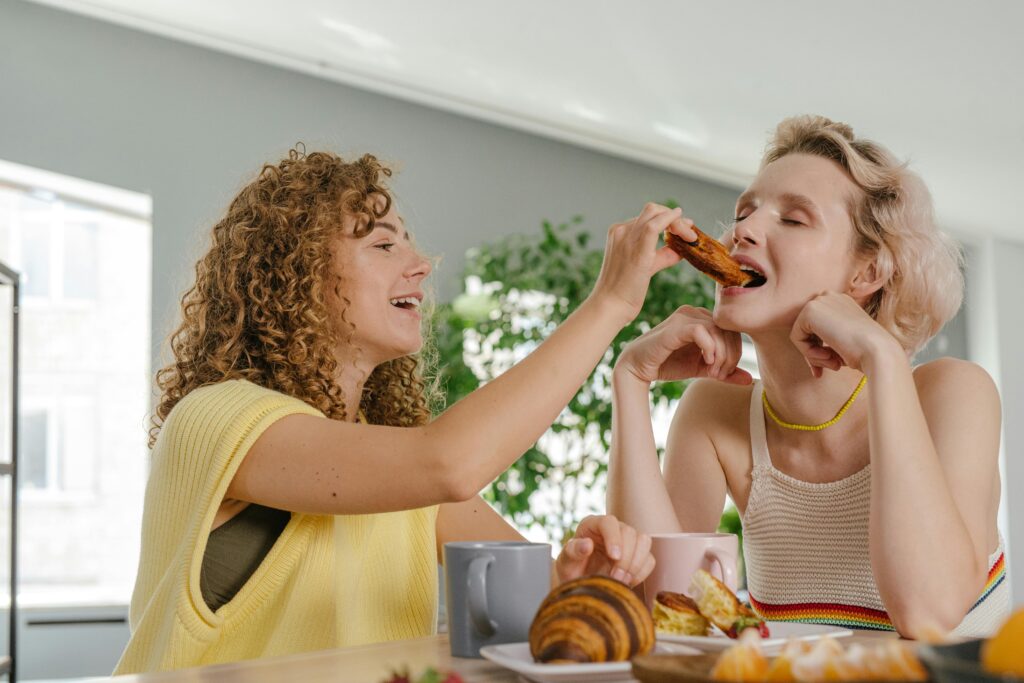
Dating while asexual can feel both liberating and complicated.
You might crave closeness, romance, or emotional intimacy without wanting sex, and that’s completely valid. Learning more about what it means to be asexual can also help you navigate dating with more confidence and self-awareness. Like any orientation, asexuality exists on a spectrum and can look different from person to person.
Whether you’re exploring your identity or hoping to meet someone who understands your boundaries and relationship style, dating as an asexual person can absolutely be fulfilling.
Each section draws on community insight and HER’s inclusive design to help you approach dating in ways that feel authentic, safe, and fulfilling.
With honest communication, supportive community, and the right expectations, it’s possible to build relationships that feel affirming, supportive, and genuinely meaningful.
HER is designed for queer women, non-binary people, and LGBTQ+ communities looking for connection in a more inclusive space. For ace-spectrum users, HER offers identity options like “asexual,” “demisexual,” and “gray ace,” along with community groups, customizable profiles, and privacy-focused tools that help people connect at their own pace.
Features like Incognito Mode, profile verification, and Asexual Pride Pins make it easier to express your identity safely while finding people who respect your comfort level and communication style.
Rather than centering traditional dating expectations, HER makes space for many different kinds of connection, including romantic, queerplatonic, low-pressure, and emotionally intimate relationships.
Starting with clarity helps create more compatible connections from the beginning.
Sharing your orientation and relationship preferences early can help potential matches understand what kinds of intimacy, affection, and connection you’re looking for.
That might look like including phrases such as “biromantic ace,” “demisexual,” or “looking for emotional connection first” in your profile. Naming your identity doesn’t lock you into rigid labels. It simply helps set expectations more honestly.
| Orientation type | Example profile language |
| Biromantic ace | “Love deep conversations and low-pressure connection.” |
| Demisexual | “Emotional chemistry comes first for me.” |
| Gray ace | “Affection-focused, emotionally connected, and low-pressure around sex.” |
| Aromantic ace | “Looking for companionship and shared experiences.” |
Asexuality is also different from celibacy or abstinence. It refers to attraction, not necessarily behavior, which is why everyone’s relationship preferences can look different.
There’s no single “correct” way to date as an asexual person. Some ace people want romantic relationships, others prefer queerplatonic partnerships, and some explore nontraditional relationship structures that feel more aligned with their needs.
Different relationship styles can look like:
What matters most is compatibility, honesty, and shared expectations, not whether your relationship looks conventional from the outside. Many people exploring these dynamics also benefit from reading more about asexual romantic relationships and how different partnerships can work in practice.
Open communication is one of the most important parts of dating while asexual. Sharing your orientation, comfort levels, and expectations early can help prevent mismatched assumptions later on.
You don’t need to overexplain yourself or become an educator for every person you date. A simple, honest explanation is usually enough. For example:
“I’m on the ace spectrum. I value emotional closeness and romance, but sex isn’t a major focus for me.”
Tone matters less than honesty. On HER, you can also use prompts and profile details to communicate these things naturally without making every conversation feel overly serious from the start.
Learning how to communicate boundaries in asexual dating can also make these conversations feel less intimidating.
Healthy boundaries work best when they’re collaborative and ongoing. Tools like a Yes/No/Maybe checklist can help both people communicate what kinds of intimacy feel comfortable, uncertain, or completely off-limits.
Instead of assuming comfort levels stay the same, check in regularly about what feels good, what doesn’t, and what might be changing over time.
Simple conversations can make a huge difference:
Consent is not a one-time conversation. Regular check-ins help both people feel emotionally safe, respected, and able to communicate honestly without pressure.
HER’s community ethos supports this kind of clarity: open, kind, and low-pressure.
Nonsexual intimacy can be deeply meaningful and emotionally fulfilling.
Many ace-spectrum people build closeness through affection, quality time, emotional vulnerability, shared routines, and physical comfort that doesn’t involve sex.
That might include:
Focusing on emotional intimacy and small rituals of care often creates stronger long-term trust and connection. Some ace-spectrum people also relate to sex-favorable asexual dating, where physical intimacy may still play a role depending on the relationship and personal comfort levels.
Predictability can make dating feel less overwhelming.
Instead of relying on spontaneous plans or high-pressure dates, try creating comfortable routines that feel emotionally manageable.
That could mean:
Consistency can help reduce anxiety while building emotional familiarity and trust over time.
| Step | Example plan | Why it helps |
| 1 | Choose one relaxed setting | Reduces overstimulation |
| 2 | Agree on a comfortable routine | Builds emotional safety |
| 3 | Add occasional new activities | Keeps connection fresh without pressure |
HER’s event features can also make it easier to build low-pressure routines and explore different asexual dating approaches and tips that support emotional comfort and consistency.
Sometimes it helps to explain your boundaries and communication preferences directly instead of expecting someone to guess them.
A personal “How I Work” guide is a simple way to share what helps you feel supported, respected, and understood while dating.
It might include:
Think of it as a low-pressure way to help someone understand how you experience connection and relationships. HER’s prompts and messaging features can also make these conversations feel more natural instead of overly formal.
Not every dating platform handles identity and privacy well, especially for ace-spectrum users.
Before joining an app, look into how it handles identity visibility, moderation, blocking tools, and community safety features.
| Platform | Ace-friendly features | Privacy & community vibe |
| HER | Asexual Pride Pin, ace community groups, Incognito Mode | Inclusive, queer-centred, strong reporting tools |
| AceSpace | Profiles private by default | Small ace-dedicated community |
| OKCupid | Inclusive orientation fields | Mixed, depends on settings |
| Taimi | Broad LGBTQ+ user base | Supports ace visibility, moderate privacy |
| AVEN | Forum-based ace network | Education and discussion, not a dating app |
Using platforms like HER that respect fluid identity and boundary-setting can make dating feel much safer and less emotionally draining.
Constantly explaining your identity or defending your boundaries can become emotionally exhausting over time.
Protecting your emotional energy is an important part of healthy dating.
Common warning signs of emotional burnout can include:
Taking breaks, stepping away from conversations, or leaning on supportive friends and community spaces doesn’t mean you’re giving up. It means you’re taking care of yourself.
Community is where validation grows. Online groups and local meetups can make dating feel less isolating and more affirming.
Being surrounded by people who understand ace-spectrum experiences often helps normalize your feelings while offering reassurance, advice, and emotional support.
Helpful spaces can include:
The more connected you feel to supportive community spaces, the easier it becomes to approach dating with confidence and self-trust. If you’re unsure where to begin, this guide on where to meet asexual people safely offers helpful starting points.
Asexuality is a sexual orientation where someone experiences little or no sexual attraction. Some asexual people still pursue romantic relationships, while others may prefer queerplatonic or companionship-based connections.
Absolutely. Many asexual people build loving romantic relationships centered on emotional intimacy, affection, trust, and shared experiences rather than sexual attraction.
Keep it honest and straightforward. Share your orientation early in your profile or first chats, and use HER’s inclusive prompts or message threads to start the conversation naturally. You can explain what attraction looks like for you, what kinds of connection you value, and any boundaries or expectations that feel important.
Use clear consent language and regular check-ins. Tools like Yes/No/Maybe lists or “How I Work” guides can help keep communication open.
Prioritizing supportive spaces, low-pressure conversations, and emotionally safe communities can help dating feel more manageable. Connecting with ace-friendly communities on HER can also help you feel less alone in the experience. Reading more ace dating tips for queer women can also help normalize your experiences and reduce dating anxiety.
Dating while asexual isn’t about dating “incorrectly.” It’s about building relationships in ways that genuinely fit your needs, comfort levels, and emotional boundaries.
Whether you’re looking for romance, companionship, queerplatonic connection, or something else entirely, the right relationships will respect your boundaries, value your identity, and support the way you experience connection. Exploring more resources on asexual dating can also help you feel more confident navigating relationships at your own pace.
Helpful reading on asexuality, relationships, and ace-spectrum dating



Robyn Exton, Mook Phanpinit, Jessica Serviat
Robyn is the CEO & Founder of HER. Find her on Twitter.