Robyn Exton, Mook Phanpinit, Jessica Serviat
Robyn is the CEO & Founder of HER. Find her on Twitter.
Select your language


Robyn Exton, Mook Phanpinit, Jessica Serviat
Apr 03, 2026
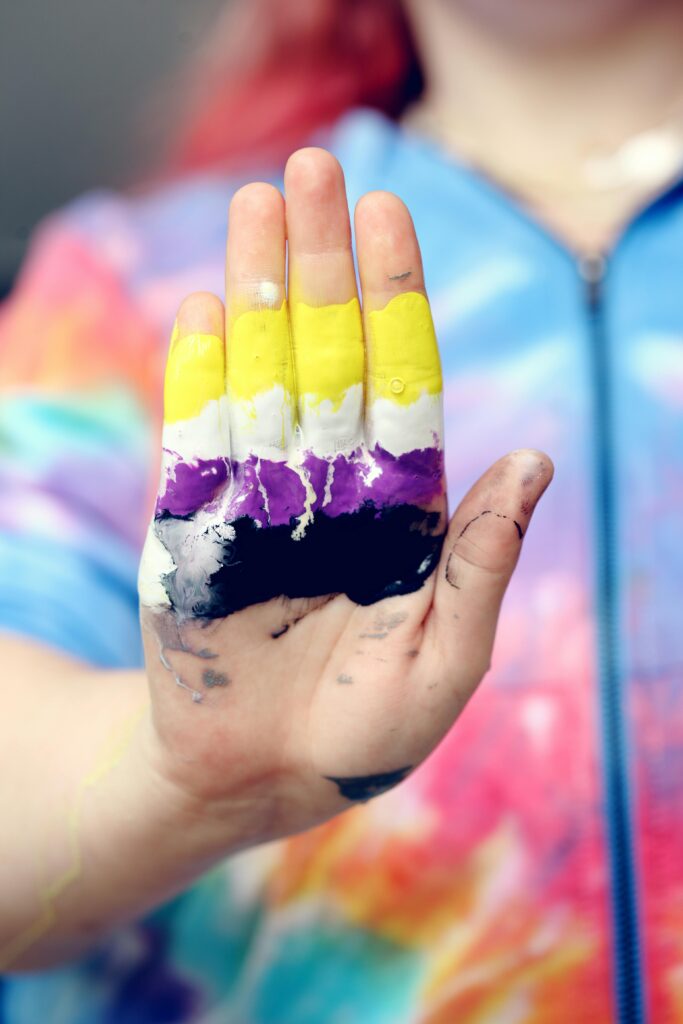
Respecting nonbinary identities isn’t about getting every word perfect. It’s about showing up with care, curiosity and a willingness to learn. We’ve all had moments where we’re not quite sure what to say, and that’s okay. What matters is the intention behind it. When someone respects nonbinary people, they make space for you to be yourself, without having to explain or shrink who you are.
Nonbinary is an umbrella term for gender identities outside the traditional male/female binary, including identities like genderfluid, agender or bigender. If you want to explore this further, you can read more about what being nonbinary means, dive deeper into nonbinary identities and experiences, or explore how to know if you might be nonbinary.
So what does real respect actually look like in everyday life? From language choices to everyday interactions, here are ten clear signs to look out for, whether you’re on a dating app, at work or just navigating your social circle.
HER was built from within queer and nonbinary communities, not around them. You can feel the difference. With over 15 million users, HER is as much a sapphic dating app as it is a social space. It’s not just about matching, it’s about feeling like you belong.
Features like customizable gender and pronoun fields, Pride Pins and thoughtful moderation make it easier to show up as yourself from the start. You’re not squeezing into a box, you’re setting your own terms.
And when it comes to safety, you stay in control. Incognito Mode and clear community guidelines help protect your privacy, so you don’t have to explain or defend who you are.
That’s what respect looks like on HER, where every identity is seen and every boundary is respected.
You can also take a look at HER’s community guidelines to see how safety and inclusivity are maintained across the platform.
Someone who respects you uses your chosen name every time. It might seem like a small thing, but it carries a lot of meaning. Using the wrong name, sometimes called deadnaming, can feel invalidating or even unsafe.
| Do | Don’t |
| Use the name someone introduces themselves with | Ask, “What was your real name?” |
| Update their contact info right away | Keep using an old name “by habit” |
Pronouns are a core part of how we refer to each other. They can be they/them, she/her, he/him or neopronouns such as ze/zir. Using them correctly, without hesitation, is a simple but powerful way to show respect.
Sharing your own pronouns in an introduction or on your profile also helps set the tone. It shows you’re open, aware and inclusive. For example, “Hi, I’m Jordan. I use they/them pronouns.”
On HER, you can display your pronouns directly on your profile, which removes the guesswork and makes that first hello feel a lot easier.
| Common Pronouns | Example in a Sentence |
| They/Them | They are meeting me later. |
| Ze/Zir | Ze brought zir jacket. |
| She/They | She said they’d message later. |
Not sure? Ask. It can really be that simple. People who respect nonbinary identities don’t guess someone’s pronouns or title. They ask with care and listen.
A simple “What pronouns do you use?” or “How would you like me to address you?” goes a long way. And if they get it wrong, they adjust and move on. No defensiveness, no drama.
Even with the best intentions, mistakes happen. We’ve all been there. What matters is how you handle it.
A respectful correction can be as simple as “Sorry, they,” and then continuing the conversation.
Long apologies or guilt spirals can end up centering the person who made the mistake, rather than the person misgendered. A quick correction keeps things respectful and keeps the moment moving.
Language can include or exclude without us even noticing. People who respect nonbinary identities tend to choose more inclusive words naturally.
Instead of:
These small shifts can make a big difference. They show awareness and help create a space where everyone feels included.
You can’t tell someone’s gender identity just by looking at them. And that’s important to remember. Nonbinary people express themselves in all kinds of ways, whether that’s masculine, feminine, both or neither.
People who are respectful don’t make assumptions based on clothes, hair or presentation. They let people define themselves and understand that expression doesn’t determine identity.
Respect extends beyond one-on-one interactions. Inclusive allies help create safer, affirming spaces. That can mean gender-neutral restrooms, forms that go beyond two options or visible pronoun fields in online communities. These kinds of environments matter even more in dating contexts, as explored in this guide on nonbinary dating challenges.
Signals of inclusion include:
On HER, these values are built in from the start, with clear guidelines and moderation tools that help every member feel seen and protected.
Protecting someone’s privacy is a key part of respect. No one should share another person’s gender identity or assigned sex at birth without their consent.
“Outing” someone, meaning sharing that information without permission, is never okay. That also means avoiding gossip about someone’s transition, not taking or sharing screenshots and not asking for personal or medical details.
Respect means letting people share their identity on their own terms.
Respectful people take the time to educate themselves. They read, listen and explore trusted sources, rather than expecting nonbinary people to carry that emotional load. Many organisations also offer helpful guidance on respectful behaviour, like this guide on supporting nonbinary people.
It’s okay to ask thoughtful questions, especially when they come from a genuine place. But starting with the basics on your own goes a long way. HER’s in-app resources and LGBTQIA+ glossary make it easy to learn more, so curiosity doesn’t come at someone else’s expense.
Respect isn’t just personal, it shows up in systems too. Supporting gender inclusivity in policies, classrooms or workplaces is how that respect becomes real.
That can look like adding “nonbinary” to forms, creating all-gender restrooms or amplifying nonbinary voices in leadership.
With around 11% of LGBTQ+ adults in the U.S. identifying as nonbinary, according to recent research, these changes aren’t niche. They matter, and they help create more inclusive spaces for everyone.
Share your pronouns when it feels safe for you, and invite others to do the same if you feel comfortable. Features like the ones on HER can help you express your identity in a way that feels right, especially when using tools designed for nonbinary users, like those explained in this guide to nonbinary dating on HER.
Whenever you feel ready. Some people include it in their profile, others wait until a connection feels more grounded and safe. There’s no one right way to do it. You can also explore different approaches in this article about starting to date after coming out as nonbinary.
Be clear about your pronouns or your limits, and don’t hesitate to point people to reliable resources like HER’s glossary. You’re not responsible for teaching everything.
They use your name and pronouns correctly, avoid unnecessary gendered language, correct themselves calmly and don’t ask intrusive questions.
It helps people feel seen and respected, reduces stress and builds a sense of belonging in all kinds of spaces, both online and offline. HER reflects this every day through its design, moderation and community care.
Robyn Exton, Mook Phanpinit, Jessica Serviat
Robyn is the CEO & Founder of HER. Find her on Twitter.