Robyn Exton, Jill O'Sullivan, Mook Phanpinit
Robyn is the CEO & Founder of HER. Find her on Twitter.
Select your language


Robyn Exton, Jill O'Sullivan, Mook Phanpinit
Feb 27, 2026
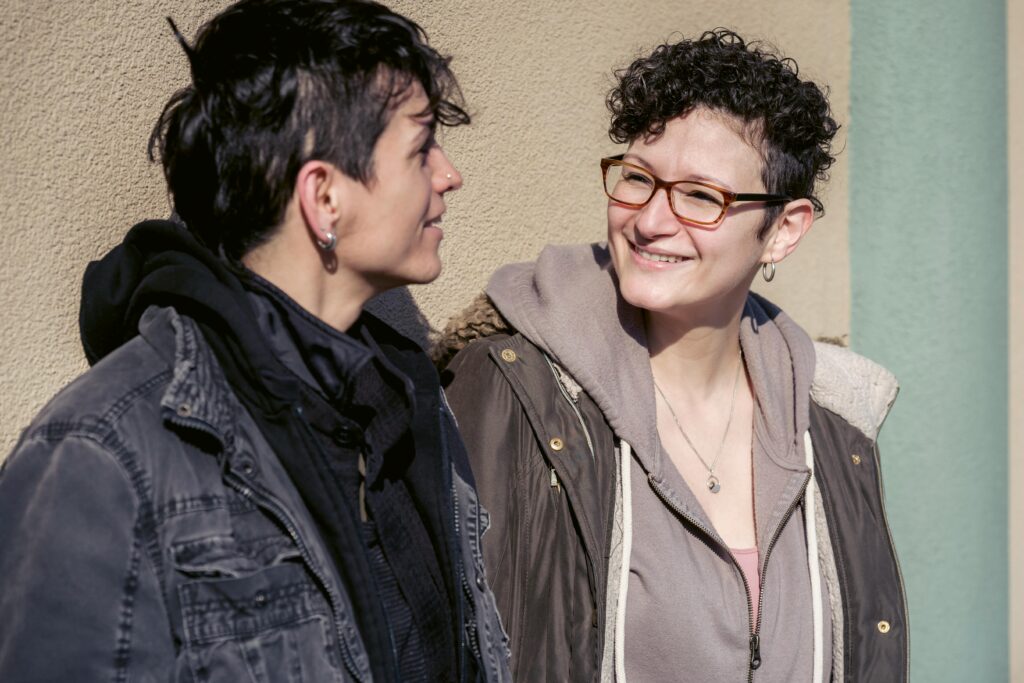
You don’t need to deliver a TED Talk to explain your bisexuality.
A simple, honest line like “I’m attracted to more than one gender” can open the door… And you are in complete control of when and how to walk through it. The goal isn’t to justify yourself: your sexuality is valid. The goal here is to help a potential partner understand you better while keeping your boundaries intact.
Below, you’ll find seven practical tips, from timing and tone to myth-busting and safety, that reflect how folks in the bisexual community actually navigate these hard conversations. If your nerves are high, that’s totally normal. Share whenever you feel ready, keep it conversational, and remember: your identity is valid whether or not someone “gets it” right away, or at all.
HER is built on queer community and honest connection, which means your safety, comfort, and self-definition come first. There’s no universal script or timeline for sharing your orientation. Disclosure is a choice, not a test you have to pass, and it’s okay to wait until it feels right for you, emotionally and situationally, as you start exploring bisexuality.
We also prioritize queer dating safety: pick spaces (online or IRL) that let you be your true self without the pressure. Your bisexual identity is valid at every stage, regardless of who you’re currently dating, because orientation is about the capacity for attraction, not just your latest relationship. That’s covered in this clear overview on understanding bisexuality.
More visibility helps all of us; more choice keeps you safe.
Make it personal, not clinical. Short “I” statements help:
Bisexuality means attraction to more than one gender. “Bi” doesn’t lock you to two, or to equal percentages about who you’re attracted to, a point many newcomers find helpful in a beginner’s guide to bisexuality. Attraction can be romantic and/or sexual, and it can ebb and flow over time. Diversity inside the label is normal, which you can read more about in this piece on bisexuality and expectations. Focus on how it feels for you rather than listing exes or “proof.” You don’t have to prove you’re gay enough (and if they’re making you, they’re probably not right for you).
You’re allowed to disclose on your own timeline. Pick a moment and method that, above everything else, is in line with your comfort and safety.
Bottom line: choose settings where you feel free to be honest: text, voice, in-person, or somewhere in between. Your pace is your own, and we respect it. Other folks will too.
Orientation doesn’t dictate your relationship style. Bisexual people date monogamously, non-monogamously, and everything in between. Though there’s a super annoying myth that suggests bisexuals are more likely to be open in relationships, attraction and behavior aren’t the same thing. This distinction is reinforced in understanding bisexuality.
It’s okay to be upfront about what you want:
Clarity early on reduces stress and counters stereotypes about cheating.
Biphobia, or prejudice toward bisexual people, and bi erasure (the minimizing or denial of bisexuality) still show up in dating spaces, unfortunately. The Bisexual Organizing Project resources offer language that can help you name what’s happening if you’re facing these kinds of stereotypes or uncomfortable challenges.
A quick myth-bust can diffuse tension:
| Myth | Truth |
| “It’s just a phase.” | Bisexuality is a valid sexual orientation, not a stepping stone. |
| “Bi people can’t be faithful.” | Attraction doesn’t equal action; fidelity is about agreements and values. |
| “You must be confused.” | Bi people understand their orientation; uncertainty isn’t the default. |
Keep it gentle and brief. Remember that you’re sharing context, not asking for permission.
Reactions will vary. Research summaries in the Bi Visibility Resource List mention that bisexual folks often face wider ranges of responses and come out at lower rates than their gay and lesbian peers. Remember that mixed reactions aren’t about your worth.
Try:
Whatever the response, your identity stands. Community helps you steady yourself and stay visible.
Stories can make things click, but you never owe intimate details.
You might say:
If questions turn invasive, redirect: “I’m happy to share how it feels for me, but I’m not comfortable getting into past specifics.” Boundaries are part of a healthy connection.
You’re not obligated to be the educator. If someone wants to learn more, point them to trusted sources and keep the convo open-ended. Remember, if they want to: they will.
Here’s some resources you can slide their way:
End it with an invite: “I’m open to questions now or later. This is a conversation, I’m not quizzing.”
Whenever you feel safe and ready. Some share early to filter, others wait until trust builds. Your timing is your call.
Try: “I’m bisexual, which means I’m attracted to more than one gender.” It’s about the capacity for attraction, not experimentation.
Give them space to process and protect your energy; lean on community support, and remember their reaction doesn’t define your identity.
There’s no rule. Share on your terms- first date if you want clarity, later if it feels safer or more natural.
Share only what feels right, and say when a question is too personal. Curiosity doesn’t override your boundaries.
Am I Bi? How To Start Exploring Bisexuality
A Beginner’s Guide to Bisexuality
Bi Visibility Resource List Final
Bi Book Club: Bisexuality, the Basics


Robyn Exton, Jill O'Sullivan, Mook Phanpinit
Robyn is the CEO & Founder of HER. Find her on Twitter.