Robyn Exton, Mook Phanpinit, Jessica Serviat
Robyn is the CEO & Founder of HER. Find her on Twitter.
Select your language


Robyn Exton, Mook Phanpinit, Jessica Serviat
Apr 03, 2026
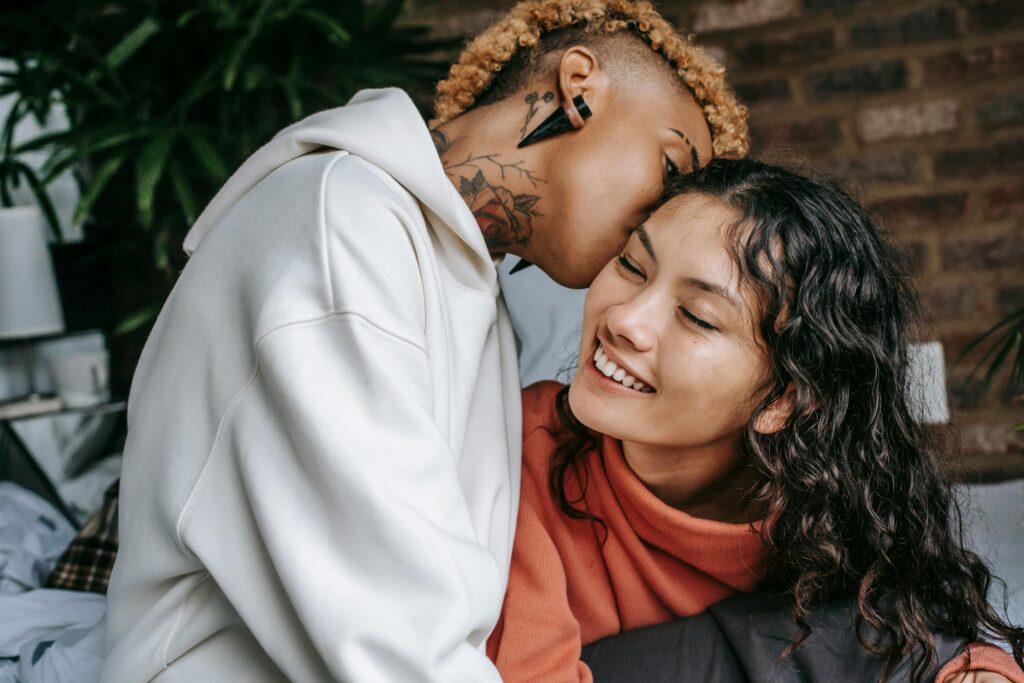
Let’s be real: dating as a transmasc nonbinary person can be exciting, a little messy, and not always straightforward. Things are evolving, but not everything has caught up just yet.
If you’re putting yourself out there, or figuring out what dating even looks like for you right now, you’re not alone. You deserve to feel confident, safe and fully seen while doing it, especially as more people explore dating beyond binary frameworks.
The good news? There are more tools, more inclusive spaces and more community-led platforms than ever before. Dating doesn’t have to mean squeezing yourself into someone else’s expectations.
It can actually feel good again. Here’s how to build connections that respect your identity, your boundaries and your pace.
The clearer you are about what you want, the easier it is to find people who actually meet you where you are.
That’s where clear-coding comes in. It’s all about being upfront about your relationship goals, your pronouns and your boundaries right in your profile. It might feel a bit vulnerable at first, but it saves a lot of confusion later. Less guessing, fewer mismatches, and way less emotional burnout.
Many queer-focused apps now include inclusive identity fields and pronouns, so use them to express your gender identity properly, such as “transmasc nonbinary, he/they.”
You can also use things like hashtags to signal your vibe and your values. #sapphic, #transjoy or #consentculture can help attract people who are on the same wavelength.
In a dating landscape that can sometimes feel vague, clarity is kind of your superpower, especially when navigating spaces like trans dating where visibility and intention matter.
Not all dating apps are created equal. And honestly, you can feel the difference pretty quickly.
Some mainstream platforms still rely on binary frameworks, which can make things feel limiting or just… off. Queer-centred spaces tend to do things differently. They’re designed with gender diversity and safety in mind from the start.
If you’re figuring out where to show up, it helps to look at things like gender options, privacy settings and how seriously moderation is taken. Those details make a real difference in how safe and seen you feel.
Here’s a quick comparison of what that can look like across a few popular apps:
| Platform | Gender identity options | Privacy tools | Community focus |
| HER | Broad range including nonbinary and transmasc | Incognito Mode, See Who Likes You, strong reporting tools | Queer-centred, sapphic-led culture |
| OkCupid | Over 20 gender and orientation options | Custom pronouns, visibility filters | Inclusive but mixed user culture |
| Feeld | Custom pronouns and identity fields | Discreet profiles, hidden location features | Open-minded, poly/queer-friendly |
Spaces with clear moderation, visible anti-harassment policies and user-led safety tools tend to create the best experience overall.
On HER, those features are built in from the start, by sapphics, for sapphics. It’s the kind of space where you don’t have to filter yourself. You just get to show up as you are.
Let’s be real, safety matters just as much as chemistry.
A lot of dating apps now give you tools to control how visible and protected you feel, and it’s worth using them. Things like profile verification (selfie or short video checks) can help you know who you’re actually talking to. Filters that block slurs or harmful language can take some of the stress out of the experience. And if you’d rather move quietly, incognito mode lets you explore at your own pace.
These features are there for a reason. Verification helps confirm that someone is real and reduces the risk of bots, scams or catfishing, so you can focus on genuine connections.
And one thing to keep in mind: if something feels off, it probably is. Never share payment info or send money, no matter how convincing the story sounds. Romance scams are more common than you might think, with average losses now reaching over $2,600.
Your boundaries aren’t overreactive. They’re protective.
A quick video call before meeting IRL is one of the easiest ways to check the vibe and feel more secure. Even 5 to 10 minutes can help you confirm someone’s identity and get a sense of their energy.
You can keep it light. Something like, “Would you be up for a quick video call before we meet?” does the job.
And if they hesitate, dodge the question or try to guilt-trip you, that’s worth paying attention to. People who are genuine will get it. Your comfort matters.
First dates don’t have to be complicated. Keeping things simple is often what feels best, especially when it also helps you feel safe.
Meeting in a public place like a café or a park is a good starting point. You can also share your plans or live location with a trusted friend, just so someone knows where you are. And if your app offers verification tools, it’s always worth using them to double-check who you’re meeting.
A quick checklist can help take the pressure off:
It’s not about being overly cautious. It’s about setting things up in a way that feels comfortable and in your control, so you can actually enjoy the moment.
Sharing your gender identity should never feel like an apology. You get to decide what you share, when you share it, and how.
Disclosure simply means sharing details about your gender history or trans identity at a moment that feels safe and right for you. For some people, that’s early on. For others, it’s a bit later. There’s no one right timing. If you’re navigating this for the first time, this guide on starting to date after coming out as nonbinary can help you find your own pace.
If you want to keep it simple, something like, “By the way, I’m transmasc nonbinary and use he/they pronouns,” is more than enough.
And how someone responds? That tells you a lot. Respect and genuine curiosity are green flags. Invasive questions or pressure to hide parts of yourself are not.
Let’s be honest, this still happens. Trans and nonbinary people can be fetishised, and it can feel uncomfortable or even unsafe.
Some signs to watch out for: someone fixating on your gender or your body, being overly pushy, acting secretive, or using language that feels objectifying. If their interest feels more like a fixation than genuine attraction, trust that instinct. Experiences like these are still widely discussed in broader trans dating guides, which highlight how important it is to stay aware and protect your boundaries.
You don’t have to entertain it, explain yourself or give someone the benefit of the doubt. Blocking and reporting is always an option.
On HER, moderation teams take reports seriously, and in-app tools are designed for quick, effective support, helping keep queer spaces safer for everyone.
Having a few go-to responses ready can make things a lot easier when something feels off. You don’t have to come up with the perfect words on the spot.
Boundary scripts are just short, clear sentences you can use to say what you need, without overexplaining. For example:
You can write a few that feel natural to you and keep them in mind for when you need them.
Boundaries aren’t barriers. They’re what make things feel safe, easy and actually enjoyable.
Dating can bring up a lot, even when you feel grounded in who you are. That’s completely normal.
Having spaces where you can recharge and feel understood makes a real difference. Queer and T4T (trans-for-trans) communities can offer that. Whether it’s in-person events, online groups or spaces that celebrate sapphic and transmasc experiences, being around people who get it can help you reset.
If you ever feel out of place in women-only or lesbian spaces, that’s valid too. Look for signals of inclusivity, like phrases such as “dykes of all genders,” that show a broader, more welcoming approach. This question comes up often, and conversations like this one on being transmasc in lesbian spaces show just how nuanced and personal that experience can be.
And most importantly, check in with yourself. If something feels off in your body, you’re allowed to pause, step back or leave.
On HER, community groups and IRL events in over 25 cities offer a softer way to connect. No pressure, just space to show up as you are.
Many transmasc nonbinary people who are attracted to women use words like “lesbian,” “sapphic” or simply “queer.” It’s really about what feels right to you and the kind of connection you’re looking for.
That can happen, and it can feel frustrating. But your identity isn’t defined by how others read you. Clear pronouns and small cues on your profile can help attract people who see and respect you as you are.
You don’t have to spell everything out. You can mention communities you’re part of, use sapphic-focused hashtags or highlight values like respect, curiosity and consent. HER’s profile prompts also make it easier to show that nuance without overexplaining.
Yes, for many people there is. A lot of transmasc nonbinary people feel at home in sapphic spaces, including identities explored in nonbinary lesbian experiences.
By combining self-knowledge, safety tools and community care, dating in 2026 can feel a lot more intentional and supportive. Whether you’re meeting someone offline or swiping on HER, remember this: your identity doesn’t complicate love. It expands it.
Robyn Exton, Mook Phanpinit, Jessica Serviat
Robyn is the CEO & Founder of HER. Find her on Twitter.