Robyn Exton, Mook Phanpinit, Jessica Serviat
Robyn is the CEO & Founder of HER. Find her on Twitter.
Select your language


Robyn Exton, Mook Phanpinit, Jessica Serviat
Apr 21, 2026
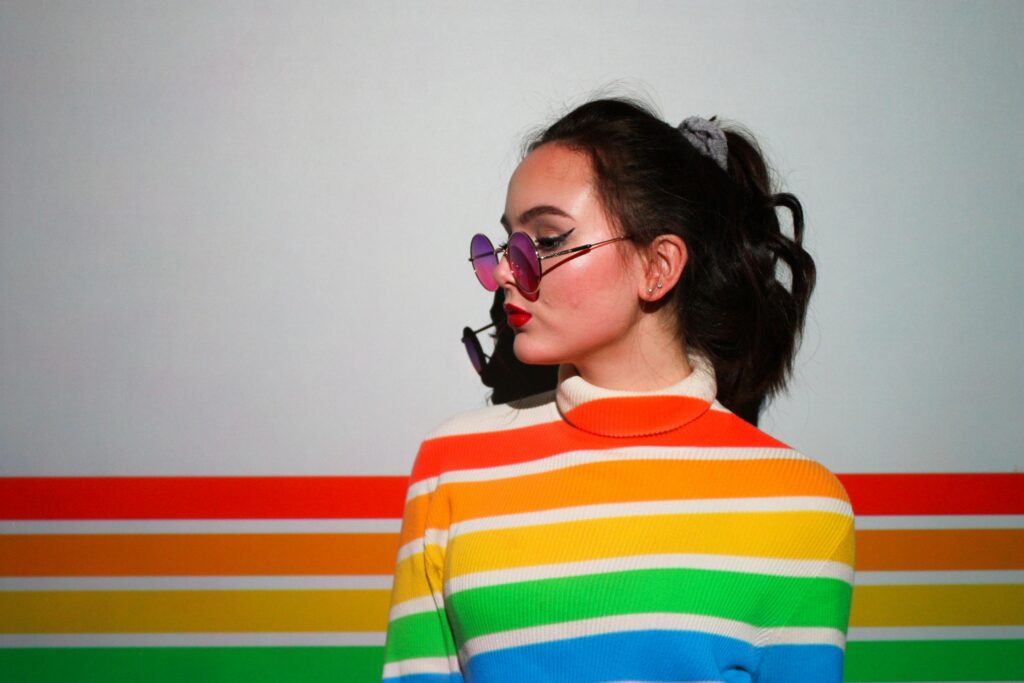
Sapphic dating is full of joy, intimacy and connection, but it’s also shaped by decades of lingering stereotypes.
From jokes about U‑Hauls to assumptions about appearance or sex drive, these tropes flatten the diversity of real sapphic experiences for women and non-binary people who love women.
Challenging them is not just about correcting the narrative. It also gives every sapphic person space to define relationships on their own terms.
Below, we’ll debunk seven common myths in sapphic dating and share how HER helps rewrite the narrative for more authentic, inclusive connection, and challenge the lesbian stereotypes that still shape how people see sapphic love.
If you’ve ever felt boxed in by a stereotype, you’re not alone.
The term sapphic refers to people attracted to women. It comes from the Greek poet Sappho of Lesbos, who wrote about love between women.
It’s an umbrella that can include lesbians, bisexual, pansexual, queer and questioning individuals.
Why debunk these myths? Because stereotypes shape behaviour, create pressure in relationships and can make people feel invisible or invalid.
HER, the world’s leading sapphic dating and community app, was built from within sapphic culture to challenge outdated narratives through real connection, fluid identity and community-first design.
Here’s what we’ll cover:
The “U‑Haul” stereotype claims queer women move in together after a handful of dates.
While it’s a common community joke, it doesn’t reflect the full range of relationship pacing in sapphic dating.
Many couples take their time, while others find comfort early on. It’s personal, not predetermined.
| Myth | Reality |
| Sapphic couples always move in after two weeks. | Relationship pacing varies widely; communication and timing matter more than labels. |
No one should feel pressured to merge their lives before they’re ready.
Clear conversations about boundaries, space and expectations help build stronger connections, especially if you’re looking for dating advice for queer women that reflects real experiences.
On HER, that balance of pacing and autonomy is supported through features designed for every rhythm of connection.
Media often sexualises sapphic love for a male audience, creating the false idea that queer women are more promiscuous or performative.
In reality, sapphic relationships exist across the intimacy spectrum, from asexual to highly sexual, and everything in between.
People seek sapphic connections for many reasons:
These motivations can overlap, but they are not universal.
There’s no single way to express or experience desire, and HER reflects that range by making space for every intention.
Many people still picture sapphic couples as a butch-femme duo: one masculine-presenting, one feminine.
While butch and femme identities are deeply valued in queer culture, they are not required roles.
Many modern sapphic relationships play with or reject these binaries entirely.
Sapphic dynamics can look very different:
| Dynamic type | Example | Key idea |
| Butch/Femme | Masculine & feminine pairing | Historic roots, still embraced by some |
| Switch | Fluid between roles | Common in modern contexts |
| Non-binary/Androgynous | Beyond gendered role play | Highlights personal authenticity |
Every presentation, from lipstick to cargo shorts, can belong in sapphic love.
HER supports identity fluidity through custom gender and orientation options, helping users express who they are without boxes.
“Lesbian bed death” is the idea that long-term sapphic couples stop having sex entirely.
While reduced frequency can happen, it appears in relationships across all orientations. Desire often changes over time due to stress, routines or life shifts.
Healthy intimacy depends on communication, not gender. Checking in about affection, pleasure and emotional needs helps many sapphic couples sustain passion for years.
On HER, conversations often start from that same emotional fluency: real, upfront and pressure-free.
There’s no universal “look” for queer women.
The assumption that someone’s orientation can be guessed by haircut, fashion or body language limits personal expression and ignores diversity.
Femmes, androgynous folks and non-binary sapphics often get overlooked or questioned because they don’t “look gay enough.”
Common mistaken “tells” include:
All of these are incorrect.
Self-expression doesn’t equal orientation, and the sapphic community thrives on rejecting those limits.
On HER, your profile is shaped by your own language and vibe, never assumptions.
Pop culture often frames sapphic love as temporary, like a teenage experiment or something done for attention.
This can invalidate genuine feelings and long-term queer identities.
When media depicts lesbianism as indulgence for the male gaze, it denies sapphic people ownership of their own romance and sexuality.
| Harmful narrative | Actual reality |
| “It’s just a phase.” | Many sapphic identities are enduring and self-defined. |
| “It’s for male attention.” | Sapphic relationships exist independently of external validation. |
Authentic attraction is not a statement for anyone else. It is simply love.
HER exists to honour that truth by centring queer women, non-binary and trans people who define their love on their own terms.
Queer dating apps often get unfairly dismissed as hookup spaces, but research tells a different story.
Research shows many dating app users are not primarily looking for casual sex, but also for relationships, connection and community, challenging the idea that apps are only for hookups.
HER stands out by offering tools tailored for all these goals, not just dating.
| What users seek on HER | App feature |
| Friendship or community | In-app events, topic groups |
| Romance and relationships | Match filters by intention |
| Privacy and safety | Incognito Mode, See Who Likes You |
For sapphics, digital spaces like HER are often key to finding safe, affirming connections that feel both grounded and open-ended.
These stereotypes do not just misrepresent sapphic life. They limit it.
When we reduce relationships to clichés, we silence nuance and authenticity.
Unlearning these myths makes space for honesty, emotional safety and freedom in both dating and identity exploration.
HER continues to champion that shift through visibility, everyday safety measures and inclusive community spaces, so everyone can connect without judgement.
HER’s mission goes far beyond matchmaking.
Its safety-led design includes features like Incognito Mode, in-app moderation and reporting tools that help users build trust at their own pace.
The app supports different types of connection, from friendship to dating, from crushes to discovery. Pride Pins, personalised profiles and community groups celebrate individuality and resist stereotypes.
Centring real people and lived experience, HER shows that sapphic dating can be as fluid, layered and beautiful as the community itself.
There’s no one way to be sapphic, and that’s the point.
It refers to the stereotype that sapphic couples move in together quickly after they start dating.
No. Appearance doesn’t reveal sexuality, and HER celebrates every kind of self-expression.
No. Many sapphic people seek emotional connection, romance or long-term partnership.
Because of repeated media portrayals and limited representation: it takes intentional spaces like HER to reshape that image.
Communicate openly, respect each other’s pace and connect in ways that feel right. Apps like HER are designed to support that rhythm.
Additional reading on sapphic dating and stereotypes:


Robyn Exton, Mook Phanpinit, Jessica Serviat
Robyn is the CEO & Founder of HER. Find her on Twitter.