Robyn Exton, Mook Phanpinit, Jessica Serviat
Robyn is the CEO & Founder of HER. Find her on Twitter.
Select your language


Robyn Exton, Mook Phanpinit, Jessica Serviat
Apr 21, 2026

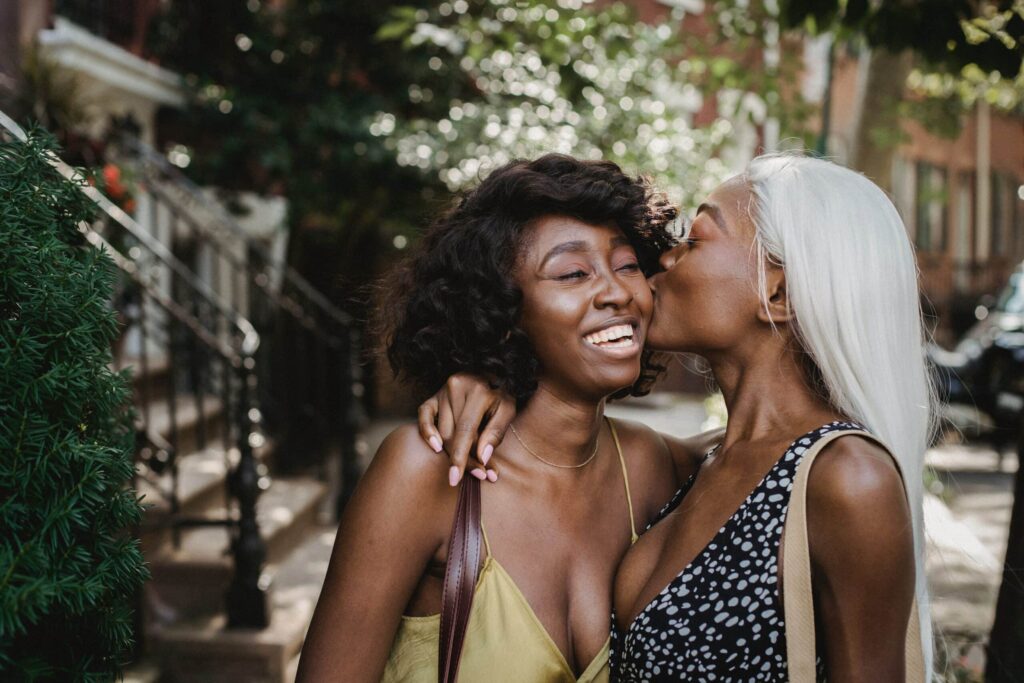
Figuring out whether someone’s interest in you is sapphic or simply friendly can feel a bit nuanced, especially in queer spaces where closeness between women is celebrated.
“Sapphic” describes romantic or sexual attraction toward women or femmes. In simple terms, it refers to people who are emotionally or physically drawn to women.
If you’ve ever wondered “How do I know if someone is sapphic?” you’re definitely not alone.
Instead of focusing on one moment, notice patterns. Recurring emotional, verbal and physical cues often go beyond platonic warmth.
Below, we break down seven clear signs that someone’s energy might be sapphic, not just friendly, and how to notice the difference with empathy and confidence.
| Sapphic signs | Typical friendly behaviours |
| Consistent conversations about women, crushes or queer topics | General small talk or friendship check-ins |
| Romantic tone or gentle jealousy cues | Neutral emotional sharing |
| Lingering touch or flirtatious eye contact | Casual hugs or platonic proximity |
| Pride symbols or sapphic media references | Mainstream pop culture engagement |
| History of crushes on women | No pattern of same-gender attraction |
| Sapphic language or online identity tags | Non-specific labels or heteronormative framing |
| Consistent private–public behaviour | Signals that change depending on audience |
If something about their energy feels different but hard to explain, it’s worth paying attention to.
The clearest sign someone is sapphic is a recurring pattern of romantic or sexual interest in women, not just a single flirty moment.
Consistency usually reveals attraction more clearly than isolated moments.
People showing steady sapphic interest often:
| One-off flirtation | Consistent romantic interest |
| Playful comment once at a party | Regularly expresses attraction to women |
| Compliments without follow-up | Sustained engagement or emotional curiosity |
| No pattern across contexts | Mentions sapphic topics in varied settings |
If her energy around women feels easy, grounded and repeating (not situational) it’s likely more than friendliness.
Sometimes the shift from friendly to romantic isn’t obvious, but you can feel it in the way someone connects with you.
When emotional closeness starts feeling romantic, that’s often sapphic attraction.
Romantic emotional framing is when someone starts relating to you in ways that feel more like a couple than just friends.
You might notice phrases like “We’d be such a cute couple,” or a flicker of jealousy when you mention another woman. She might imagine shared futures or post partner-coded captions about you.
Emotional intensity alone isn’t proof: friends can be deeply connected, but when that emotion carries romantic intent, the energy naturally shifts.
Body language often shows interest before words do, especially in early stages.
In sapphic settings, flirting can be subtle, sometimes for safety or clarity, but it’s still there.
Common sapphic cues include:
Research suggests same-gender attraction often increases eye contact compared to platonic connection. Still, everybody communicates differently. Neurodivergence, culture or comfort level can shape what that looks like.
Sometimes the signals are subtle at first, and only become clearer over time.
Many people signal sapphic identity through quiet, visible cues. It’s not about stereotypes, it’s about belonging and feeling safe in a shared community.
You might see:
These signals say “I’m part of this world.”
On HER, for example, many members use Pride Pins or identity prompts in their profiles to show who they are and find others on the same wavelength.
A person’s romantic history can often help clarify their orientation.
If someone mentions past crushes, hookups or relationships with women, that pattern usually reflects genuine sapphic identity rather than a one-time experience.
Consider:
Sexuality can be fluid, but recurring attraction to women, even across genders, usually shows stable sapphic orientation.
The way someone talks about themselves often reveals how they see their identity.
Some identify as lesbian or queer, others as bi or pan with a sapphic leaning, or simply use sapphic as a term that honours fluid attraction.
Listen for phrasing like “the sapphics,” “queer girl problems,” or jokes about always catching feelings for women.
Profiles or posts might include sapphic-coded emojis, pronouns or tags from queer creators.
These hints quietly express comfort and belonging.
Real attraction tends to stay consistent across different situations, and that consistency is often one of the clearest signs of genuine attraction.
When affectionate private messages match public comfort, you’re likely seeing genuine sapphic interest rather than mixed signals.
Ask yourself:
Alignment between private intimacy and public presence builds clarity and trust, more than any single gesture could.
Repeated attraction to women, romantic framing, flirting, sapphic symbols and identity language that openly signals orientation beyond friendship.
Soft, sustained eye contact with smiles or subtle leaning in often indicates attraction, especially when matched with other cues.
Touch that lingers or happens during a flirty or private moment tends to suggest attraction; brief, situational touch is usually platonic.
Very. Honest conversation reduces confusion and creates space for both people to share feelings safely, something HER encourages across all connections.
Yes. When their romantic energy stays consistent in both spaces, their feelings are likely real and rooted, not just friendly.
If you’d like to explore this a bit more, here are a few trusted resources:



Robyn Exton, Mook Phanpinit, Jessica Serviat
Robyn is the CEO & Founder of HER. Find her on Twitter.