Robyn Exton, Jill O'Sullivan, Mook Phanpinit
Robyn is the CEO & Founder of HER. Find her on Twitter.
Select your language


Robyn Exton, Jill O'Sullivan, Mook Phanpinit
Feb 27, 2026
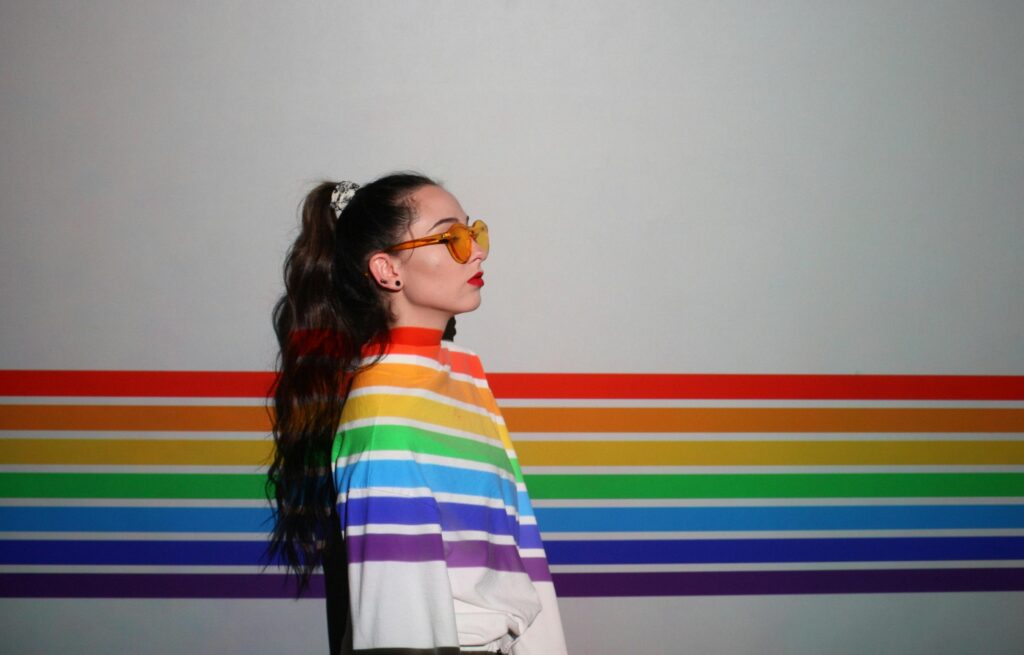
Getting told you’re “not queer enough” while dating hits hard. It’s invalidating, awkward, and distracts from what actually matters: your safety, joy, and sense of self.
Comments like this are a form of queer gatekeeping, or when someone tries to police who counts. Unfortunately, this has been bubbling up as culture wars and visibility debates spill into everyday life. Data shows that familiarity gaps and politicized narratives are shaping how people treat LGBTQ+ folks, especially younger folks navigating dating (GLAAD, Accelerating Acceptance 2025).
This guide shares seven practical, low-drama ways to respond in the moment, helping you protect your energy and peace, stay confident and proud, and support a more inclusive sapphic community, both online and IRL.
HER is a queer dating app built for lesbian, bisexual, queer, non-binary, and trans people: full stop. Safety, authenticity, and open-ended identity expression come first, so you can show up without a performance test. Unlike more generic apps, HER actively fights gatekeeping and gives you tools to explore, evolve, and connect with a real LGBTQ+ community in a safe dating environment.
New here? Hi! Welcome! We are so incredibly happy to have you. Check out our guides like Baby Gay 101 (HER’s Baby Gay guide) or practical Dating Tips (HER’s Dating Tips).
Gatekeeping is when someone tries to decide who counts as queer. It harms people, reinforces stigma, and piles on the exhausting pressure to “prove yourself”. Which they don’t even realize is the exact same shit that’s amplified by anti-queer backlash and bad-faith debates.
Quick, quotable call-outs you can borrow:
Typical lines and calm responses:
| What they say | A grounded response |
| “You’ve only dated men/women—are you even queer?” | “Behavior isn’t the same as identity. My label is mine.” |
| “You don’t look queer.” | “There’s no one queer look. Stereotypes aren’t a measure.” |
| “Bisexual isn’t queer enough.” | “Bi is queer. I’m not seeking permission.” |
| “Prove it.” | “Nope. Identities aren’t auditions.” |
Naming it clearly sets the tone: you respect yourself, and you won’t play a rigged game.
A simple clarifying question puts the pressure back where it belongs.
Try: “What do you mean by ‘not queer enough’?” or “What exactly are you asking me to prove?”
Why it works: Most accusations fall apart when someone has to explain their criteria. It’s usually stereotypes or bullshit, not facts.
Examples:
Read the room. If they get defensive or the vibe turns sketchy, you don’t owe them more engagement. Safety > their comfort (see Andrea Crapanzano, PhD, on dating as a queer person).
You get to define yourself. Period. A firm, breezy line, then pivot… Or end the convo. We officially sign your permission slip for swiping left and unmatching on folks who don’t support you.
Reclaiming language means taking words back on your terms. That’s deciding what your labels mean for you, not letting someone else assign them. Saying it once and moving on shows healthy boundaries and keeps your dating confidence intact (see Healthline on the ‘am I queer enough?’ spiral).
If you have the energy, a one-liner can reset the moment:
“Queer identities are super diverse—there’s no single way to be queer.”
Familiarity gaps fuel stereotypes: only 22% of non-LGBTQ+ adults personally know a trans person, and just 11% know someone who is nonbinary (GLAAD, Accelerating Acceptance 2025). Exposure to LGBTQ+ people in media boosts familiarity and reduces bias (GLAAD, Accelerating Acceptance 2025). Style ≠ identity; queer aesthetics are not an entrance exam (Archer Magazine).
Tired? Skip the teachable moment. Your self-preservation comes first, and they can do their own research. If they wanted to, they would.
Humor can be a shield. It lowers the stakes, protects your joy, and avoids escalation. Plus, honestly sometimes it just feels awesome in a shitty situation.
Quick context-based options:
Leaning into queer joy and finding lightness even in tense moments has long been a protective force for our community (QueerAF, 2025).
You’re always allowed to leave. Protect your energy.
Boundary lines:
Mini checklist for disengaging:
HER lets you curate your experience with safer matching and moderation tools. It’s your feed, and it’s your rules (HER’s Dating Hotline for support).
If a one-time insult turns into harassment, or repeated, targeted messages or behavior meant to intimidate, shame, or silence, you don’t have to tolerate it. And you shouldn’t. You don’t need that in your life.
Clear, inclusive policies matter. Across industries, more organizations are stepping up and we are stoked to see it. HRC’s Corporate Equality Index 2025 lists 765 businesses with top scores for LGBTQ+ inclusion. You deserve platforms and spaces that take this seriously.
If questioning your sexuality feels overwhelming, grounding exercises and community support can help (Verywell Mind’s guide to questioning your sexuality).
Start by setting your own boundaries, and if you feel safe, state your identity with confidence. You never have to prove your queerness to anyone.
Prioritize self-acceptance, seek out affirming friends and spaces, and remember you are valid without passing a “queer enough” test.
If the convo feels unsafe, draining, or the other person isn’t listening, it’s okay to step away and protect your energy.
Listen, affirm their identity, and offer backup. Sometimes presence and validation are the most powerful antidotes to exclusion.
Boundaries keep you safe, conserve energy, and make it clear that respect is nonnegotiable. Gatekeeping has no place in a healthy queer community.
What 2025 was like for Queer People, and what we’ll carry into 2026
On being “not queer enough,” struggling for acceptance
The Disorienting Reality Of Not Feeling ‘Queer Enough’ For Your Own Community
Some Answers to Some Things You’ve Been Asking Us #15
Gatekeeping in the LGBTQ+ Community
Queer Aesthetics Not Feeling Queer Enough


Robyn Exton, Jill O'Sullivan, Mook Phanpinit
Robyn is the CEO & Founder of HER. Find her on Twitter.